

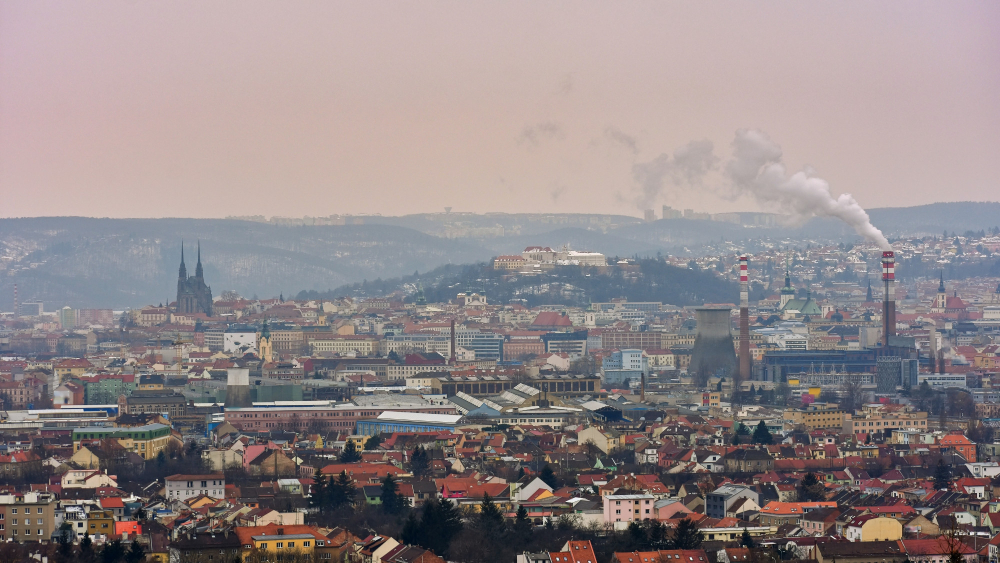
When you drive through the industrial corridor outside Ludwigshafen on a weekday afternoon, you can still smell chemicals and see the enormous network of pipes and towers that make BASF one of Europe’s most recognizable industrial sites. However, the company declared that it is “permanently” reducing its operations there, eliminating thousands of jobs and reducing the size of what was once a declaration of German industrial ambition. not switching to a rival company. not reorganizing for expansion. just making investments abroad while shrinking at home. That sums up Germany in 2026.
In Germany, the term “sick man of Europe” has a long history. The nation earned it during the late 1990s and early 2000s, when unemployment rose above 11 percent, average GDP growth fell to 1.2 percent per year, and reunification costs continued to bleed through the federal budget like an old wound that would not go away. Things gradually improved under Chancellor Schröder’s painful labor market overhauls known as the Hartz reforms, which reduced unemployment benefits, relaxed dismissal regulations, and made an overdeveloped welfare state a reality. Germany was referred to as an economic superstar by the late 2000s, with exports reaching a record $1.738 trillion in 2011—roughly half of its GDP. It appeared that the diagnosis had been incorrect, or at least temporary, for over ten years.
| GDP Growth (2024 & 2025) | Economy officially shrank for the second consecutive year in 2024; 2025 GDP growth estimated at ~0.2% |
| Industrial Production | No higher than 2005 levels; manufacturing accounts for ~20% of gross value added |
| Unemployment (2025) | Rising to nearly 3 million — highest rate in 14 years |
| Key Industrial Exits | VW planning to close 3+ of 10 German plants; BASF “permanently” downsizing Ludwigshafen HQ; Intel delayed €30B chip plant by 2 years |
| Business Relocation Trend | ~37% of German companies considering cutting production or moving abroad (DIHK survey) |
| Digital Investment Gap | Digital tech investment as % of GDP less than half that of the US or France |
| Energy Dependency | 70% of energy imported; nuclear phase-out complete; gas pipeline from Russia disrupted since 2022 |
| Government Budget Gap | Finance ministry warns of €172 billion spending shortfall through end of decade |
| Current Chancellor | Friedrich Merz (CDU/CSU) — took office 2025; coalition support at 25%, historic low; polls behind AfD |
| Reference / Research | cer.eu — Centre for European Reform |
It wasn’t. Although the issues that reappeared weren’t exactly the same as before, they came together in a short amount of time, leaving the economy with few defenses. The inexpensive natural gas pipeline that had subtly boosted German industrial competitiveness for decades was cut off by Russia’s invasion of Ukraine in 2022. The price of energy increased. Chemicals, steel, glass, fertilizers, and other heavy industries in Germany rely on inexpensive energy in ways that are difficult to replace or reroute.
At the same time, China, which had been a major market for German exports of industrial equipment, automobiles, and machinery, started building its own sophisticated rivals. Chinese automakers outperformed German automakers in the domestic Chinese market that German automakers had spent years developing, especially when it came to electric vehicles. For many years, Volkswagen considered China to be a second home market, but its sales there began to decline at an alarming rate. At least three of the company’s ten plants in Germany will be closed, and the remaining plants will be downsized.
Germany’s industrial production has not increased since 2005. Holding that number motionless for a moment is amazing. Twenty years of essentially stagnant production from the nation meant to serve as the developed world’s manufacturing standard. For the past two years, the German economy has shrunk. The number of unemployed people has increased to almost three million, the highest level in fourteen years.
According to a survey conducted by the DIHK industry association, about 37% of German businesses are thinking about shifting operations overseas or reducing domestic production. These are not boardroom grievances or speculative worries. The federal government had already committed €9.9 billion in subsidies to support Intel’s planned €30 billion chip plant in eastern Germany, but the company announced a two-year delay. Nevertheless, the investment stalled.
The majority of serious economists diagnose Germany’s problems as structural rather than cyclical. This is significant because structural issues cannot be solved by a single stimulus package or a change of government. The nation’s reliance on imports for 70% of its energy has always been a vulnerability disguised as an efficiency ploy. The one baseload energy source that wasn’t dependent on foreign supply chains was eliminated by the nuclear phase-out, which was carried out under the previous administration despite the war in Ukraine making it clearly more expensive.
Even projects with local approval, environmental clearance, and signed land contracts can be blocked by heritage agencies concerned about castle sightlines due to the convoluted and contradictory bureaucratic processes that have stifled renewable construction. For the better part of a decade, digital investment as a percentage of GDP is less than half that of the US or France. This disparity has been observed, discussed, and not addressed.
When Friedrich Merz became Chancellor in 2025, he had some momentum. He pushed through a partial relaxation of Germany’s self-imposed constitutional limit on public borrowing, known as the “debt brake,” using the departing Bundestag, when center parties still held the supermajority required for constitutional changes. This resulted in the creation of a €500 billion infrastructure and climate fund. It sounded like the kind of bold action that Germany had been anticipating.
However, the fund is distributed over a twelve-year period, and reports in the German press indicate that some of the infrastructure funds are being diverted from productivity-boosting investments to fill regular spending gaps. With a narrow majority, Merz’s coalition is already publicly disintegrating. A €172 billion gap in spending plans through the end of the decade has been alerted by his finance ministry. Within six months of taking office, his own poll numbers have plummeted to all-time lows, with the CDU/CSU bloc trailing the far-right AfD for the first time. His pension reform speech was publicly rejected by the minister of his social democratic coalition partner in a way that made it clear how things were going between them.
The extent of Germany’s involvement in global manufacturing supply chains is what makes its situation significant outside of Europe. German factories produce automotive parts, chemicals, and machinery that are used in industries in dozens of other nations. The suppliers in Eastern Europe, the exporters in Asia who depend on German machinery orders, and the European neighbors who have tied their own industrial strategies to German demand are all affected when German industrial output stagnates. It is not just a German story that the largest economy in the euro area is growing at a rate of 0.2 percent while facing structural issues with energy, digital infrastructure, labor costs, and demographics. Growth in Europe is capped. As it develops, there’s a sense that the window for painless reform closed a few years ago, leaving behind the more challenging task of reorganizing an economy that based its identity on a set of advantages that the rest of the world has either surpassed or caught up to.