

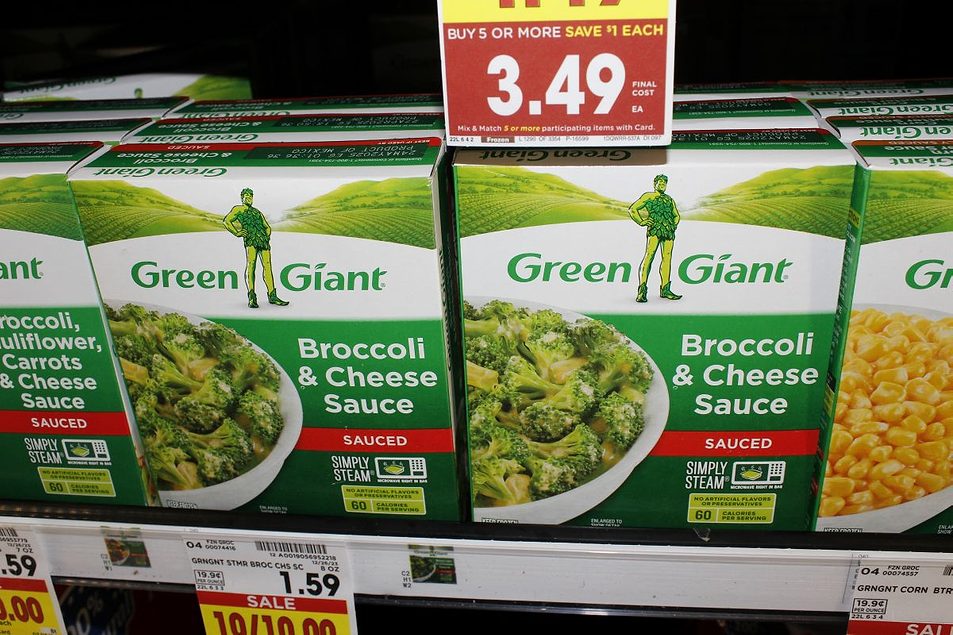
B&G Foods Inc. has completed a major portfolio restructuring with the divestiture of nearly all its Green Giant brand assets, marking what CEO Casey Keller described as a significant milestone for the company. The Parsippany, New Jersey-based food manufacturer sold its Green Giant US frozen vegetables product line to Seneca Foods Corp. on March 2, finalizing a series of transactions that began with a strategic review in February 2024. This latest Green Giant divestiture follows previous sales of the brand’s canned vegetables business, the Le Sueur canned vegetables line, and the Canadian operations of both Green Giant and Le Sueur brands.
However, the portfolio transformation came at a cost as B&G Foods reported its fourth consecutive annual loss for fiscal 2025. The company posted a loss of $43.6 million for the year ended January 3, compared to a $251.3 million loss in fiscal 2024, according to the company’s March 3 earnings announcement.
Green Giant Divestiture Reshapes Company Strategy
The sale of the Green Giant US frozen business to Seneca Foods represents the largest component of B&G’s portfolio transformation efforts. Keller explained during the March 3 analyst conference call that the Green Giant frozen business did not align well with B&G’s operational strengths. The business involved seasonal production, different temperature requirements, geographic complexity, and higher working capital intensity than the company’s core shelf-stable products.
Additionally, B&G entered into a co-manufacturing agreement with Seneca to produce certain Green Giant frozen items, which is expected to generate approximately $100 million in annual net sales. The company received about $63.2 million in proceeds from the transaction, according to CFO Bruce Wacha. These funds, along with proceeds from previous divestitures, will help finance B&G’s acquisition of Del Monte Foods’ broth and stock businesses.
Impairment Charges Impact Financial Results
The fiscal 2025 loss was primarily attributed to pre-tax, non-cash impairment charges totaling $60.8 million, significantly lower than the $320 million in impairment charges recorded in fiscal 2024. The impairment costs included $34.8 million related to Green Giant brand assets, $26 million for Victoria and McCann’s brands, and $28.5 million from assets held for sale in the Green Giant Canada transaction, the company reported.
Meanwhile, adjusted net earnings for fiscal 2025 were $41.3 million, or 51 cents per share, compared to $55.7 million, or 70 cents per share, in the prior year. B&G attributed the decrease to lower net sales and higher raw material costs, including tariff impacts. The adjusted earnings per share met Wall Street’s consensus estimate of 51 cents.
Fourth Quarter Performance
In the fourth quarter, B&G posted a loss of $15.2 million, down from a $222.4 million loss in the year-ago period. Adjusted net earnings reached $22.8 million, or 28 cents per share, versus $23.5 million, or 30 cents per share, in the prior-year quarter. The result fell slightly short of analysts’ average projection of 30 cents per share.
Net sales for fiscal 2025 declined 5 percent to $1.83 billion from $1.93 billion a year earlier. The decrease reflected lower base business sales and the loss of $22.6 million in sales from the Le Sueur US and Don Pepino divestitures, according to the company. Fourth-quarter net sales decreased 2.2 percent to $539.6 million, though base business sales rose 0.8 percent.
College Inn Acquisition Adds Growth Platform
In contrast to the divestitures, B&G announced in January an agreement to acquire Del Monte Foods’ broth and stock businesses, including the College Inn and Kitchen Basics brands. Keller said the transaction is expected to close by the end of March, pending final approvals. The broth and stock category has grown in the low to mid-single digits over the past year and maintains good margins, he noted.
Furthermore, Wacha explained that B&G is effectively using proceeds from the break-even Green Giant US frozen business to partially fund the acquisition of the more profitable College Inn and Kitchen Basics operations. The strategy aims to deliver a more focused portfolio with positive adjusted EBITDA growth, stronger cash flows, lower working capital intensity, and higher margins.
Segment Performance Varies
The Spices & Flavor Solutions segment led performance in the fourth quarter with net sales up 4.2 percent to $106.1 million. However, tariff costs totaled approximately $4.4 million in the quarter and $9.5 million for fiscal 2025, Keller said. The company announced pricing actions during the third quarter to recover these costs, though full implementation with some customers took longer than expected.
The Frozen & Vegetables business saw net sales drop 10 percent in the quarter to $99.1 million and 9 percent for the year to $358.6 million, mainly due to the Le Sueur US divestiture. The Specialty segment experienced a 3 percent quarterly decline to $210.2 million and a 7 percent annual decrease to $630 million, partially reflecting the Don Pepino divestiture.
B&G projects fiscal 2026 net sales of $1.655 billion to $1.695 billion and adjusted diluted earnings per share of 55 to 65 cents. The outlook excludes the pending Green Giant Canada divestiture and College Inn/Kitchen Basics acquisition, with both transactions expected to close during the fiscal year. The Green Giant Canada sale to Nortera Foods is anticipated to close in the second quarter, pending regulatory review in Canada.