

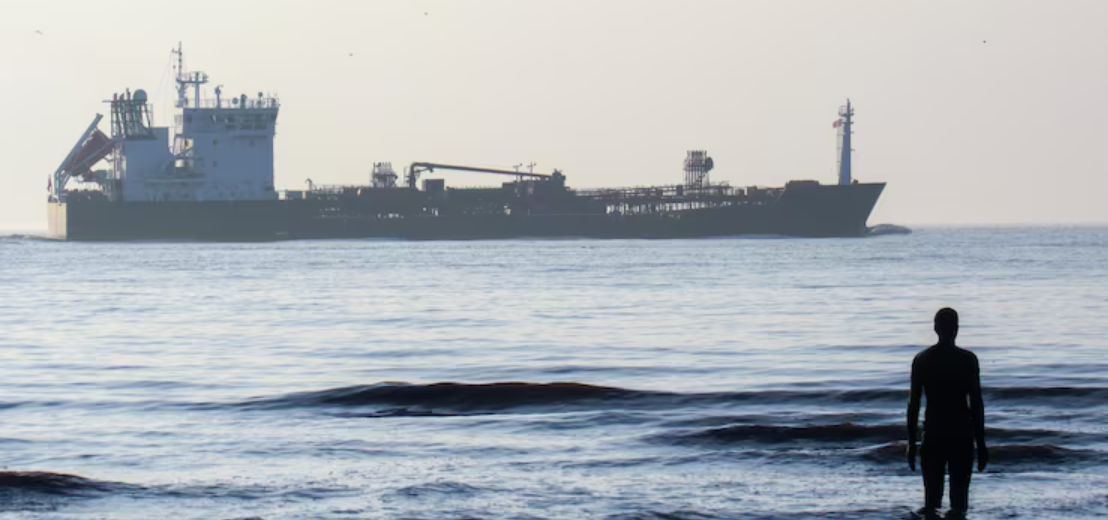
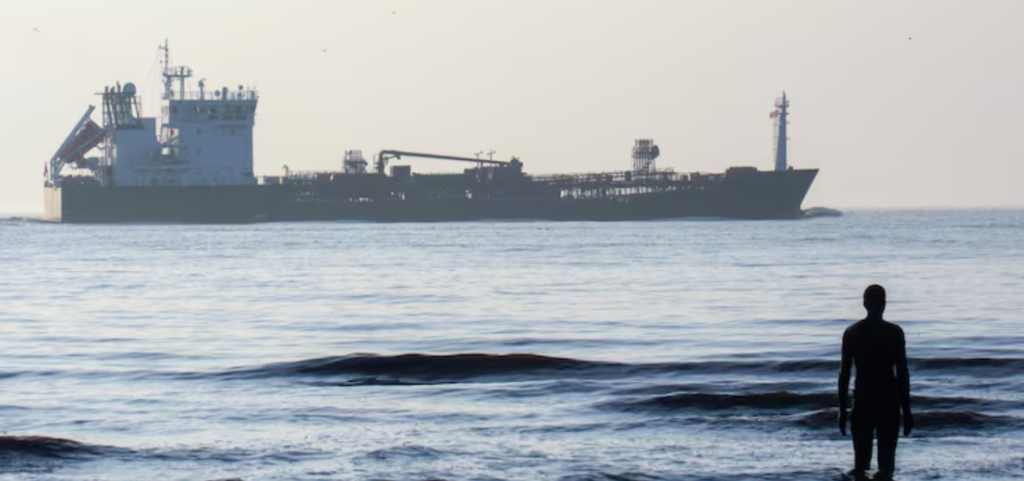
A tanker the color of weak tea sat nearly motionless in the swell on a winter morning in early 2024 somewhere off the Danish coast, its transponder dark for more than two days. These ships don’t usually make headlines unless they leak, so locals on shore wouldn’t have noticed. However, that small gap in the data indicated something specific on the screens of analysts in Washington and Brussels: another ship, most likely carrying Russian crude, had chosen to temporarily vanish. It’s difficult to ignore how commonplace this has become.
The most covert solution to one of the largest economic experiments of the decade is the maritime shadow fleet, as it is now commonly known. Following Russia’s invasion of Ukraine, the EU and G7 tried something novel: instead of outright banning Russian oil, they set a price cap of US$60 per barrel, supported by shipping and insurance regulation. On paper, the reasoning made sense. Keep the oil flowing while depriving the Kremlin of revenue. In actuality, Russia followed the custom of sanctioned countries. It created its own path.
| Field | Details |
|---|---|
| Subject | The Maritime Shadow Fleet (also called the dark fleet or grey fleet) |
| Estimated Size | Between 300 and 600 tankers globally, according to IMO assessments |
| Primary Cargo | Crude oil and petroleum products, occasionally iron, luxury goods, and dual-use items |
| Western Price Cap | US$60 per barrel on Russian crude (in force since December 2022) |
| Key Regulators | EU, G7+, IMO, OFAC (US Treasury) |
| Main Origin Nations | Russia, Iran, Venezuela, North Korea |
| Common Tactics | AIS blackouts, ship-to-ship transfers, spoofed positions, flags of convenience |
| Average Vessel Age | 15–20 years; many over two decades old |
| Insurance Status | Largely uninsured by Western P&I clubs |
| Environmental Risk | Severe — substandard maintenance, unclear ownership |
| Geographic Hotspots | Baltic Sea, Gulf of Oman, Malacca Strait, Mediterranean |
| Estimated Revenue Preserved | Tens of billions of US dollars annually for sanctioned states |
Since 2022, a vast, semi-legal fleet of between 300 and 600 tankers has surfaced. The majority of these vessels are old, and many of them are registered under convenient flags in unquestioning locations. Through layered ship-to-ship transfers in international waters, they transport sanctioned oil to buyers in Asia, the Middle East, and sometimes back into European supply chains under separate documentation. Investors appear to think the plan will last. Otherwise, they wouldn’t continue to buy used tankers at prices that would have seemed ridiculous just two years ago.
The strategies aren’t particularly novel. Since the late 2010s, Iran has been engaging in similar activities. The scale is striking. For hours or days at a time, ships frequently turn off their AIS transponders, which are the GPS-like signals that every ship is required to broadcast. Some even go so far as to pretend to be in one harbor while actually loading crude hundreds of miles away.
In Dubai, the Marshall Islands, and a few other jurisdictions that have recently seen an unusual increase in activity, ownership structures wind through shell corporations. Shipping insiders feel that no one really knows who owns what anymore, and that might be the whole point.
To be honest, I’m most concerned about the environmental risk. These ships are not brand-new. With maintenance records that would never pass a port-state inspection in the West, many are approaching twenty years of age. They sail without insurance or with insurance from unidentified companies. Someone will be responsible for paying the cleanup costs if one of them bursts in the Baltic, which nearly happened in 2024 when a tanker lost steering close to a Danish strait. It most definitely won’t be the registered owner in some Caribbean post office box.
Over time, European reactions have become more rigid. In an exceptionally detailed move, the EU has started naming specific vessels in its sanctions packages. Parliament has advocated for improved satellite surveillance and stricter shipping regulations. It’s still unclear if any of it functions at scale. The shadow fleet has time on its side because enforcing sanctions on the high seas has always required patience.
There’s a more subdued lesson to be learned from watching this play out. Sanctions are predicated on the idea that the international shipping industry is fundamentally Western, with Western brokers, insurers, and legal systems. That presumption is eroding. The infrastructure for evading sanctions already exists, and it won’t go back into the box, regardless of what happens with the oil price cap.