

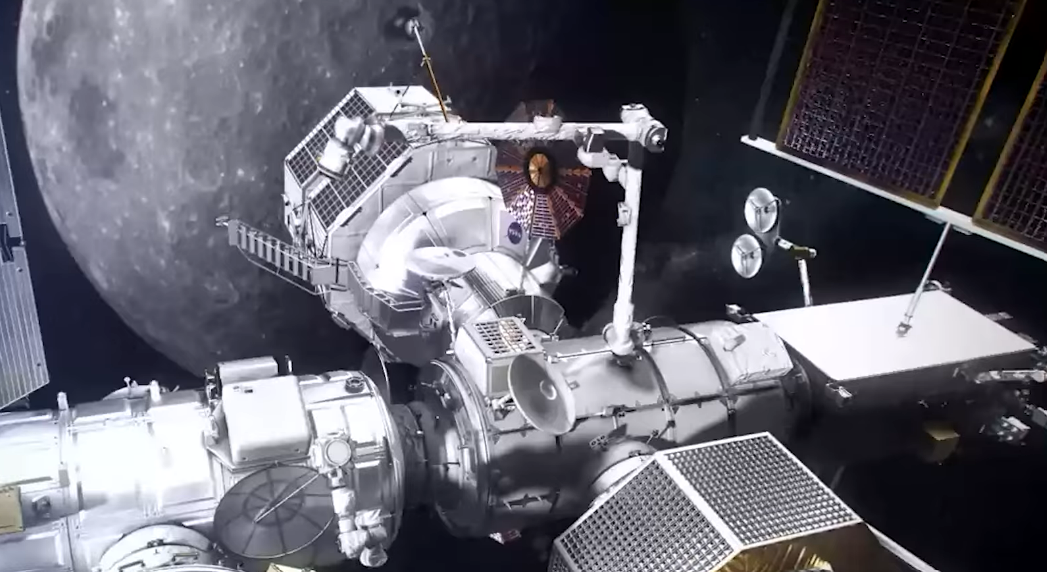
On the morning of March 24, the SLS rocket sat on launch pad 39B at Kennedy Space Center in Florida, illuminated by the kind of sunrise that gives you hope that big things are achievable, outside NASA headquarters in Washington. Inside the building, NASA Administrator Jared Isaacman was getting ready to make an announcement that would have seemed unimaginable only a few years ago: the agency was formally shelving the Lunar Gateway, a project that has been developed for almost ten years, assembled by international partners across three continents, and mostly completed.
The gateway was meant to be the focal point of the Artemis building. Astronauts would board landers before descending to the surface and then return to the small space station in a nearly rectilinear halo orbit around the Moon. Japan had agreed to participate. Canada was a signatory. It involved the European Space Agency. Northrop Grumman was a hardware manufacturer. The subsidiary of Intuitive Machines had produced more. Then, all of that was neglected in favor of a different vision: a $20 billion base on the lunar surface, built in stages through the early 2030s, without anything quite as definitive as a cancellation—NASA is cautiously referring to it as a “pause.”
Part of the stated rationale is pragmatic. The goal of Gateway was to orbit the Moon at an apogee that required landers to use a lot of fuel to descend to the surface and back. Eliminating that orbital waypoint reduces one significant engineering constraint, streamlines the lander architecture, and, at least in theory, expedites the landing of boots on the Moon. “It should not really surprise anyone that we are pausing Gateway in its current form,” Isaacman said to the assembled group of members of Congress, business representatives, and foreign delegates. However, the directness of that statement didn’t sound the same in the room as it did on paper. It was a complete surprise to everyone who had spent years creating something for this program.
Key Facts: NASA’s Lunar Gateway & Artemis Program Overhaul
| Category | Details |
|---|---|
| Program Name | NASA Artemis Program — Lunar Exploration Campaign |
| Key Decision | Lunar Gateway orbital space station officially “paused” — March 24, 2026 |
| Announced By | NASA Administrator Jared Isaacman (appointed by President Trump, December 2025) |
| Announcement Event | NASA “Ignition” event, NASA Headquarters, Washington D.C. |
| Replacement Plan | $20 billion lunar surface base, developed in three phases through ~2032 |
| Gateway Status at Pause | Largely already built; contractors Northrop Grumman and Intuitive Machines subsidiary Lanteris Space Systems had completed hardware |
| Artemis 2 Launch Window | Opens April 1, 2026 — first crewed Artemis mission; 10-day flight around the Moon |
| Next Milestones | Artemis 3 (2027, Earth orbit test); Artemis 4 (2028, first lunar landing attempt) |
| Lunar Lander Status | SpaceX (Starship) ~2 years behind schedule per NASA Inspector General; Blue Origin also delayed |
| International Partners Affected | ESA, JAXA, Canadian Space Agency — all had Gateway commitments now in question |
| Geopolitical Context | China targeting 2030 crewed Moon landing; NASA framing program as strategic competition |
| Additional Announcement | Nuclear-powered spacecraft to Mars planned before end of 2028 |
| Moon Base Phases | Phase 1: robotic landers/rovers; Phase 2: semi-habitable modules; Phase 3: permanent long-duration habitation |
| Reference Links | Space.com — NASA’s Lunar Gateway Space Station Is Out. Moon Bases Are In. / Reuters — NASA Plans Moon Base, Nuclear Spacecraft in Multibillion-Dollar Moon Program Expansion |
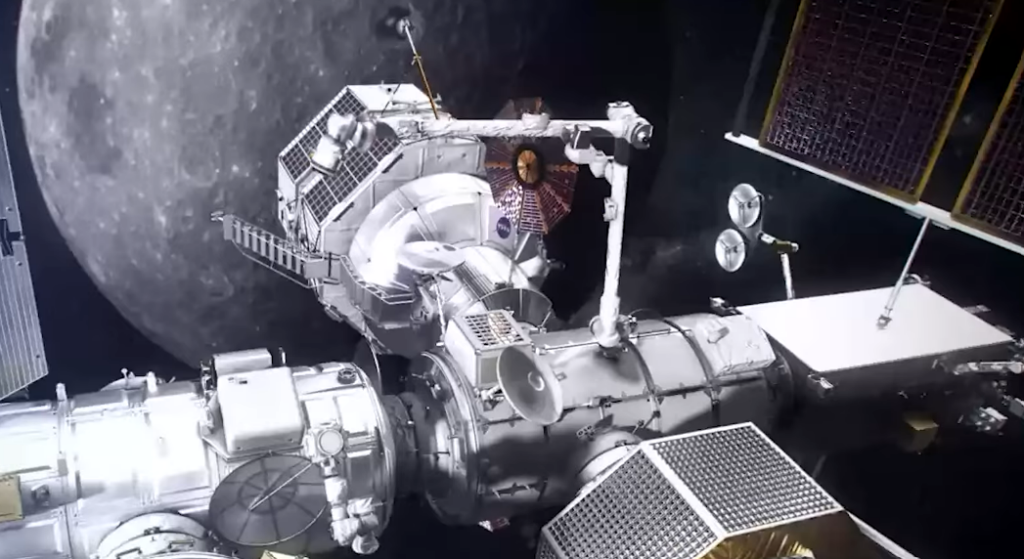
The announcement was also motivated by the geopolitical framing. NASA’s new leadership has been remarkably forthright about viewing China’s 2030 goal for its own crewed Moon landing as a competitive threat rather than an abstract issue. The term “real geopolitical rival” was used by Isaacman without qualification. According to this interpretation, the redesigned Artemis plan is more about national positioning than space science; it’s a race with a clear finish line and a competitor who, by most accounts, is actually moving closer to it. NASA’s willingness to put up with the disruption of canceling or repurposing hardware that has already been constructed and paid for is partly explained by this urgency.
As this develops, there’s a feeling that the international partnership component might be the most difficult to discreetly ignore. While at the Ignition event, ESA chief Josef Aschbacher told reporters he would “study the new plans”—a diplomatic way of expressing a more nuanced reality. The Lunar Utility Vehicle was a commitment made by Canada. Although in a different setting, JAXA was providing a pressurized rover that is still included in NASA’s updated plans. The future of ESA’s contributions is now less certain. Partner hardware will be “repurposed wherever possible,” according to Isaacman. However, repurposing international commitments is more difficult than it seems, especially when the partner countries had negotiated access to crew slots and missions as part of their agreements. These discussions are still going on, and it’s safe to say they’re not totally comfortable.
In the meantime, the lunar landers that are essential to the surface base strategy are not prepared. The two human landing systems under contract with NASA, SpaceX’s Starship and Blue Origin’s Blue Moon, are both approximately two years behind schedule, according to NASA’s inspector general. Humans have not yet been landed anywhere by either company. Prior to the Gateway pivot, the 2028 goal for the first Artemis lunar landing was already ambitious, but it now faces a backdrop of lander programs that are still resolving basic engineering issues. NASA has stated that it will use whichever lander is prepared first, which is both a realistic accommodation of reality and an admission that the precise timetable is more of an ideal than a guarantee.
The sheer number of times this story has been told makes it difficult to ignore. Apollo came to an end in 1972. The era of the shuttle came and went. Constellation was canceled. Artemis was created by preserving Orion from Constellation. Now, Gateway is no longer included in the plan in any way. In May 2025, a Trump administration budget proposal attempted to cut it, but it was postponed ten months later. Each iteration carried the promise that the commitment would be upheld this time, along with actual human effort and engineering advancement. Compared to the Gateway architecture it replaces, the three-phase moon base plan unveiled this week is more comprehensive and cohesive. Only time will tell if it maintains its shape in the face of shifting leadership, budget cycles, and the inherent complexity of trying something new.
On April 1, Artemis 2 launches. After ten days of flight around the Moon, four astronauts will return. Not a landing. Not a base. There is no gateway. All that was visible through Orion’s windows was the Moon, waiting to see what would happen next.