

I first became aware of the issue while observing a man pacing around a charger that was refusing to wake up in a parking lot outside a grocery store in northern New Jersey. He gave his card a tap. He disconnected. He re-plugged it. Nothing. “Is it actually working?” is the question that every EV owner eventually asks aloud when a second driver pulls up behind him and lowers his window. Compared to most quarterly sales reports, that little, slightly ridiculous scene says more about the current state of electric mobility.
Sticker price, battery range, and the political climate surrounding tax credits have dominated discussions about EVs for years. However, a different issue has emerged subtly, virtually unnoticed by anyone. The lack of quality is not the reason why people are refusing to purchase electric vehicles. Because they don’t trust the plugs, they are hesitant. Drivers’ long-standing concerns were quantified by the 2025 HERE–SBD EV Index: over half of American respondents cited charging access as their top concern, and 43 percent mentioned charging time. Such figures don’t point to a warming market. They point to a market that is quietly growing impatient.
| Field | Detail |
|---|---|
| Topic Focus | Public and private EV charging infrastructure across the U.S. and Europe |
| Primary Source | HERE–SBD EV Index 2025 |
| Survey Sample | More than 2,000 drivers across the U.S., France, Germany, Spain, Italy, and the UK |
| U.S. Charge Points Added (2024–2025) | 37,000 new ports, a 19% increase |
| Europe Charge Points Added | 245,000 new public chargers, up 27% |
| Top Consumer Concern (U.S.) | 53% cite lack of charging access |
| Charging Speed Concern | 43% of U.S. respondents flag charging time |
| Projected U.S. Port Demand by 2030 | Roughly 28 million ports |
| Notable Research | Harvard Business School EV charging study, 2024 |
| Key Markets Highlighted | New Jersey, New York, Germany, UK |
Yes, the infrastructure is expanding. In the most recent index cycle, the United States added about 37,000 charge points, a 19% increase. More public chargers were added in Europe (245,000) than in the United States as a whole. On paper, impressive. Less impressive when you consider that by 2030, the United States alone will require about 28 million ports, according to McKinsey. Reading the data gives the impression that the industry is racing up a never-ending escalator.
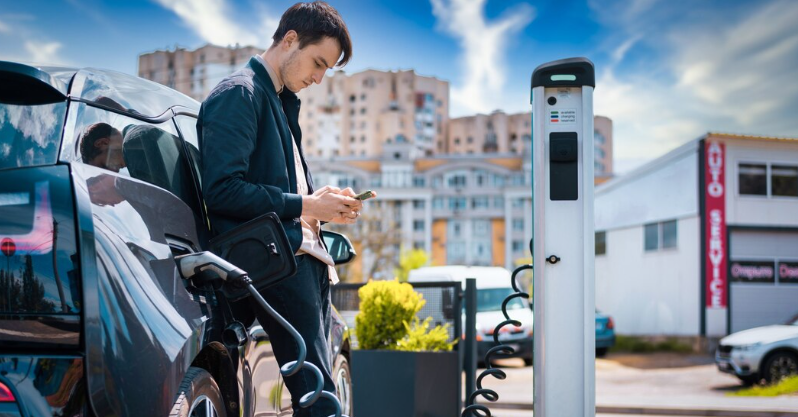
It’s not just the math that makes the gap so harmful. It’s a matter of perception. Late last year, Frontier Economics discovered that drivers greatly underestimate the number of UK service stations that genuinely provide EV charging. People make poorer showroom decisions because they think the network is worse than it actually is. To put it plainly, according to a McKinsey survey, 42% of doubtful consumers stated they would only consider an EV if charging was as simple as pulling into a gas station. It’s a high standard. Perhaps an irrational one. However, this is the standard that customers have set, and it hasn’t worked to pretend otherwise.
Additionally, there is a cultural component that no one seems to want to acknowledge. For ten years, Tesla persuaded consumers that EVs were futuristic, fast, and aspirational. Right now, things are different. Those who were among the first to adopt have already done so. The next generation of consumers is far less inclined to schedule their weekend around a charger that might or might not work, and they are also more pragmatic and skeptical. It’s difficult to avoid thinking back to the early days of mobile data, when “coverage” was the only factor that mattered, as you watch this unfold. EVs are currently in their coverage era.
Whether governments, utilities, and automakers will act quickly enough to bridge the trust gap before it worsens is still up in the air. The chargers are on their way. One stalled session at a time, the question is whether they will show up before consumer confidence subtly erodes in parking lots across the nation.