

One type of economic harm does not appear in a single day’s market report. Like water seeping into a foundation, it builds up silently and remains undetectable until something breaks. Five years later, the post-COVID global economy essentially looks like that. Although the initial chaos of 2020 is no longer in the news, the structural changes it brought about will not go away. If anything, they’re solidifying every month.
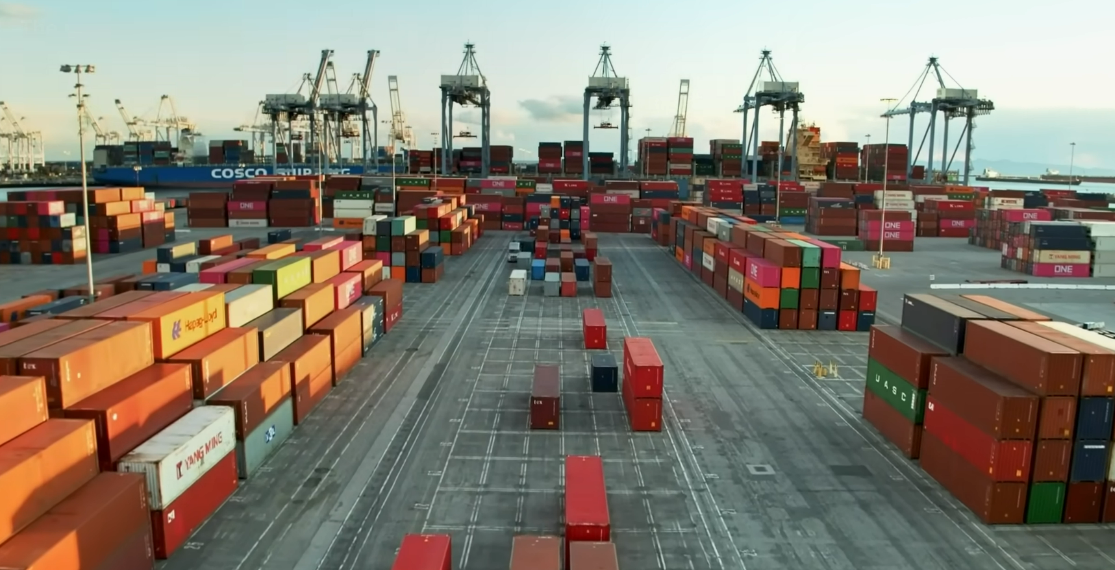
The pandemic affected global supply chains in the same way that an unexpected power outage strikes a factory in the middle of a shift. Demand plummeted in some industries and skyrocketed in others, borders closed, and the complex network of production relationships that businesses had spent decades perfecting just broke. Outside ports, container ships were idle. Production of automobiles was delayed on three continents due to shortages of semiconductors. Orders for Bangladesh’s garment industry, which generated over $34 billion in export revenue in a single year, were canceled at a rate that nearly instantly left millions of workers unemployed. Because the entire logic of global production prior to 2020 was predicated on the idea that things would largely continue to function, it was a stress test that no one had anticipated.
It’s no longer an assumption. It was replaced by something messier, more costly, and most likely more honest. Businesses became lean and fragile at the same time due to the elegant efficiency of just-in-time manufacturing, where components arrived at factory floors with nearly no buffer stock, minimizing costs to the last dollar. It turns out that fragility is fine up until it isn’t, and when it isn’t, there are serious consequences. These days, businesses and governments are constructing what analysts refer to as “just-in-case” supply chains, which include increased inventory, supplier diversity, and regional redundancy. It is more expensive to operate. At the end of the chain, that expense is typically transferred to the person purchasing groceries or prescription drugs.
| Category | Details |
|---|---|
| Event | COVID-19 Pandemic (declared global emergency: March 2020) |
| Primary Economic Impact | Synchronized global supply chain collapse; demand-supply shock |
| Supply Chain Model Shift | From “Just-in-Time” (efficiency) to “Just-in-Case” (resilience) |
| Global Trade Drop | Over 5% decline in goods trade, Q1 2020 (UNCTAD) |
| Poverty Impact | 77 million additional people pushed into extreme poverty (2019–2021) |
| Inflation Character | Structural, persistent — not transitory as initially claimed |
| Autonomous Supply Chains (est.) | 45% of supply chains mostly autonomous by 2035 |
| Telehealth Adoption (US) | Rose from 11% to 76% in 2020; change has largely held |
| Platform Holders’ Profit Growth | 191% increase between 2015 and 2025 |
| Key Structural Trend | “Slowbalization” — shift from global efficiency to regional resilience |
| Reference Links | Federal Reserve Bank of Richmond — Supply Chain Resilience and Economic Shocks / PMC — Supply Chain Recovery Challenges Post-COVID |
Because it was misinterpreted in its early stages, the inflation story that followed COVID is worth considering. Central bankers and government economists in several nations characterized the price increases in 2021 and early 2022 as temporary disruptions that would self-correct once supply chains stabilized. That proved to be incorrect, or at the very least, overly optimistic. The Journal of Monetary Economics published research on what economists refer to as “scarring” from supply shocks: a mechanism in which supply disruptions not only result in brief price increases but also suppress aggregate demand in ways that maintain high inflationary pressure long after the initial shock. For the first time since the late 1970s, inflation hit double digits in a few developed economies. It increased even further in some developing economies.
The geopolitical aspect significantly exacerbated the situation, which remains unresolved. Early in 2022, Russia invaded Ukraine, adding a second significant supply shock to a system that had not yet fully recovered from the first. Prices for energy surged. Grain supplies became more scarce. Studies have demonstrated that times of increased geopolitical tension raise inflation regardless of the price of any particular commodity due to the impact on consumer expectations and business confidence. As a result, the uncertainty itself became its own economic variable. Economists now believe that compound disruption is a constant aspect of the environment rather than an exception that needs to be controlled.
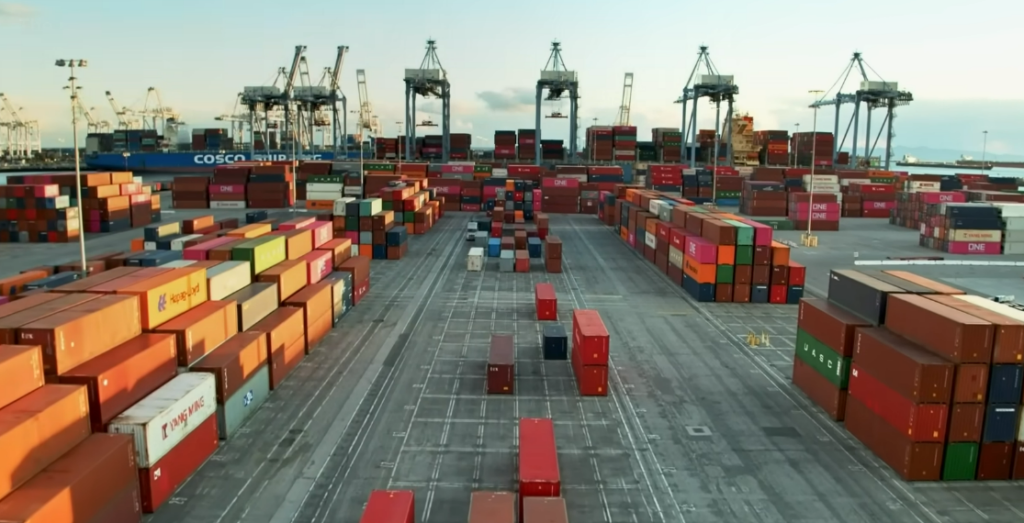
Businesses have responded in a noticeable, if costly, manner. In ways that would have seemed improbable prior to the pandemic, nearshoring—moving production closer to consumer markets, frequently back to domestic or regional facilities—has accelerated. Technology is making it feasible: decades of outsourcing are gradually being reversed as automation, robotics, and AI-assisted logistics have reduced the labor cost premium of manufacturing in higher-wage nations. Some economists refer to this as “slowbalization,” an awkward but fairly accurate term for a world in which geographic resilience is being subtly exchanged for the unrelenting drive toward global efficiency. It’s not precisely deglobalization. It’s more akin to a managed retreat, with each business attempting to determine what level of risk is appropriate for it.
Some of the most critical restructuring occurred in the pharmaceutical and medical device industries. Early in 2020, it was impossible to ignore the vulnerability of geographically concentrated medical supply chains as hospitals scrambled for basic protective equipment, with shortages reported from New York to Madrid to Mumbai. Since then, governments in the US, the EU, and several Asian countries have pushed for local production capacity of necessary medications and supplies, not for efficiency reasons but rather as a simple national security calculation. When the immediate memory of the crisis fades and cost pressures reappear, it’s still unclear if those investments will hold.
Discussions concerning supply chain models and inflation indices often overlook the human cost of all of this. According to World Bank estimates, the pandemic drove 77 million more people into extreme poverty between 2019 and 2021, reversing years of gradual global progress. Developing countries that relied on tourism, export revenue, or remittances from workers overseas were struck by several shocks at once, resulting in debt loads that continue to restrict their ability to make recovery-related investments. Framing the COVID economic legacy primarily in terms of supply chain architecture is unsettling because the most severe harm was caused by something as basic and human as this.
It’s hard not to feel a sort of regretful realization that the flaws in the system were always present as you watch all of this happen. Although the efficiency gains from globalized just-in-time production were genuine, they were predicated on stability assumptions that proved to be weaker than anyone was willing to acknowledge. Higher costs, more robust supply chains, and increased regional self-reliance are examples of structural changes that are likely to last longer than their predecessors. No one can yet confidently respond to the question of whether they will be sufficient to handle the next significant disruption, in whatever form it takes.