

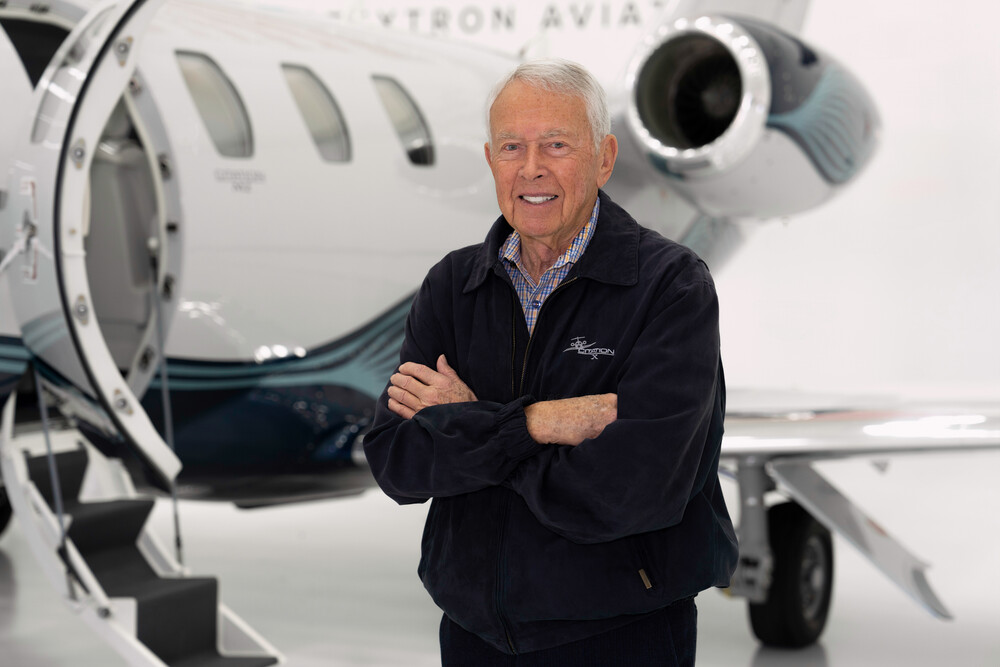
The business aviation industry is mourning the loss of Russ Meyer, a transformative leader who shaped modern general aviation over five decades. Meyer, who served as CEO and chairman of Cessna for nearly three decades, passed away on March 4, 2026, in Wichita, Kansas, following a brief illness. The National Business Aviation Association announced his death, with President Ed Bolen calling him the person who had the most profound impact on business aviation history.
Meyer joined Cessna in 1974 as executive vice president and rose to CEO just one year later. He led the company until his retirement in 2003, overseeing a period of unprecedented growth in the Citation business jet line. According to NBAA, more than 8,000 Citation aircraft have been delivered over the past 50 years, establishing the brand as a cornerstone of owner-flown business aircraft.
Business Aviation Pioneer Championed Industry Reform
Meyer’s influence extended far beyond aircraft manufacturing. During his three terms as chairman of the General Aviation Manufacturers Association, he spearheaded the campaign to pass the General Aviation Revitalization Act of 1994. This landmark legislation reformed aviation product liability laws and revitalized the industry, leading to increased aircraft production and job creation across the sector.
The legislation came with Meyer’s personal commitment to resume piston-engine aircraft manufacturing at Cessna. According to Bolen, Meyer fulfilled that promise immediately after witnessing President Clinton sign the bill in the Oval Office, demonstrating his dedication to both regulatory reform and practical industry growth.
Decades of Aviation Policy Leadership
Meyer’s advocacy work began long before his tenure at Cessna. He played a crucial role in establishing the Airport and Airway Trust Fund in 1970, which provides dedicated funding for aviation infrastructure. Additionally, during the fuel crises of the 1970s, Meyer worked to ensure general aviation received reasonable fuel allocations, protecting the industry during a critical period.
His crisis management skills proved invaluable during the 1981 air traffic controllers’ strike. Meyer was instrumental in maintaining operations of the national air traffic system throughout the disruption, according to the association’s statement.
Defending Business Aviation’s Public Image
In 2008, when automobile executives faced criticism for using business aircraft while seeking federal assistance, the business aviation industry confronted a significant public relations challenge. Meyer responded by recruiting prominent figures including golf legend Arnold Palmer, astronaut Neil Armstrong, and investor Warren Buffett to participate in a campaign defending the industry’s value and importance.
Palmer and Meyer shared a particularly close friendship. In his autobiography “A Golfer’s Life,” Palmer wrote about judging people by the company they keep, naming Meyer first among four individuals whose company he valued most.
Recognition and Philanthropic Legacy
The aviation community honored Meyer with numerous prestigious awards throughout his career. NBAA presented him with its Meritorious Service to Aviation Award in 1995, recognizing his lifetime contributions to advancing aviation interests. That same year, the National Aeronautic Association awarded him the Wright Brothers Memorial Trophy for significant public service to American aviation.
Meyer was inducted into the National Aviation Hall of Fame in 2003. Under his leadership, Cessna earned two Robert J. Collier Trophies from the NAA, one for Citation safety records and another for the Citation X, then the world’s fastest business jet.
In 1987, Meyer established the Citation Special Olympics Airlift in South Bend, Indiana. The program has grown into what NBAA describes as the largest peacetime civil aircraft operation in U.S. history, with hundreds of Citation pilots transporting athletes to National Special Olympics USA Games. However, Bolen noted that Textron Aviation will continue the tradition this summer, ensuring Meyer’s philanthropic vision endures.
Meyer held degrees from Yale University and Harvard Law School and served as a fighter pilot in both the U.S. Air Force and U.S. Marine Air Corps between 1955 and 1961. Before joining Cessna, he worked as an attorney and led Grumman American Aviation Corporation as president and CEO.
Details regarding memorial services have not yet been announced by the family or the industry organizations Meyer served throughout his distinguished career.