

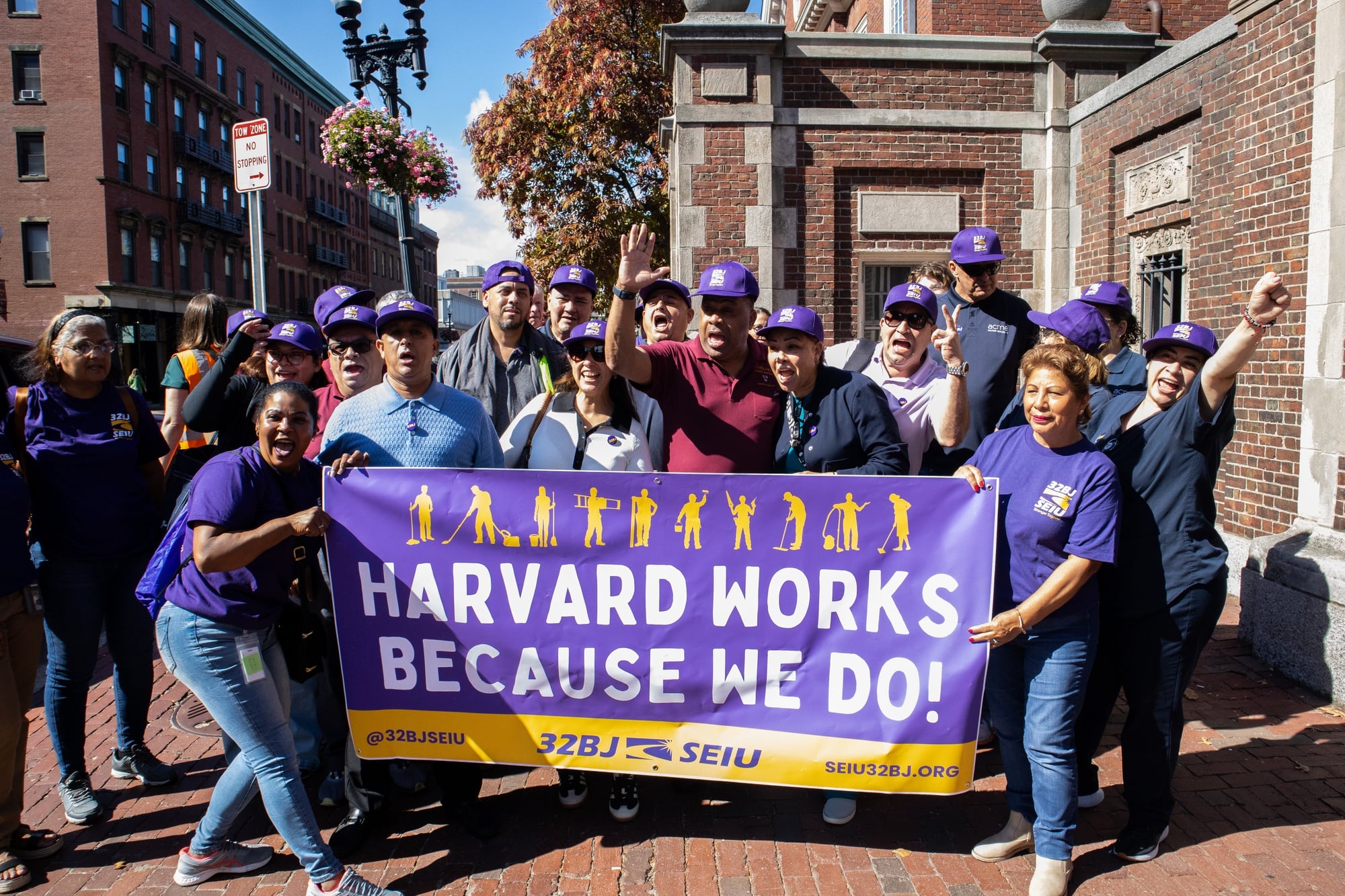
Harvard University and its custodial union reached a tentative agreement Tuesday evening on a four-year contract that includes the largest wage increase for custodians in two decades. The Harvard custodial contract agreement ends nearly five months of contentious negotiations between the university and Service Employees International Union 32BJ, which represents both direct Harvard employees and workers from five contracted companies.
The tentative contract covers wage increases, overnight shift premiums, healthcare benefits, and immigration protections for union members. According to a press release from the union, custodians will vote on the agreement in the coming days, and if ratified, it will become effective retroactively to November 15, 2025, when the previous contract expired.
Harvard Custodial Contract Delivers Four-Dollar Wage Increase
Under the new agreement, custodians will receive approximately four dollars in hourly wage increases over four years, raising compensation from $28.68 to $32.68 by 2029. The increase will be phased in gradually, with $0.75 added in 2026, followed by $1.00 in 2027, $1.10 in 2028, and $1.15 in 2029, according to union officials.
This represents a significant improvement over Harvard’s earlier proposal, which would have raised wages to around $31 by 2029 through smaller annual increments. Executive vice president of 32BJ-SEIU Kevin Brown stated that the new wage scheme surpasses cost of living estimates in the greater Boston area, fulfilling a top union priority.
“Our top goal was to have above cost of living increases to make up some of the ground people lost during the pandemic,” Brown said in comments to reporters.
Enhanced Benefits for Overnight Workers
Additionally, the agreement increases the overnight shift premium from $1.75 to $2.00 per hour. This change follows a recent blizzard during which custodians working extended shifts struggled to find adequate sleeping accommodations, with some resorting to freshman common rooms and custodial closets after designated areas lacked sufficient cots.
The contract also includes a $500 ratification bonus for union members upon approval. However, this represents half of the $1,000 stipend Harvard had offered during the most recent bargaining session.
Healthcare and Immigration Protections Secured
The tentative agreement maintains the healthcare package from the previous contract, continuing annually-compounded payments to the union’s healthcare fund. Brown described these healthcare terms as critical for custodians and their families, stating that the agreement “allows working people to be able to provide the health care for themselves and the family that they really need.”
Meanwhile, the contract includes revised language protecting immigrant workers’ job security. According to Brown, the new provisions clarify that custodians facing documentation or visa issues can take leaves of absence and return to work once matters are resolved. In contrast, the union did not secure a joint legal fund it had sought to help defray attorney costs for members facing immigration challenges.
Five Months of Difficult Negotiations
The agreement concludes what Brown characterized as “extremely difficult” bargaining that lasted nearly five months. The negotiation process included rallies, a two-day strike in October, and the involvement of a federal mediator in December, according to union reports.
University spokesperson Jason A. Newton stated that Harvard was “pleased” with the tentative agreement, expressing gratitude for the university’s custodial staff. Brown credited the outcome partly to public support from elected officials including Representative Ayanna Pressley and State Representative Marjorie Decker, who participated in solidarity rallies.
Implications for Regional Labor Negotiations
Brown indicated that the Harvard custodial union contract could provide leverage for upcoming negotiations at other Boston-area institutions. The union plans to begin bargaining this year at MIT, Boston University, Northeastern, and Tufts, representing over 1,500 additional members across these campuses.
Union members will convene in the coming days to vote on ratification, though no specific date has been announced. The timeline for the vote and the margin needed for approval remain subject to union procedures.