

When Vijay Sankaran, a young MD-PhD candidate at Harvard Medical School, entered a hematology clinic in the mid-2000s, he met a 24-year-old whose life had been structured almost exclusively around pain. For generations, sickle cell disease has been attacking people from the inside out with malformed red blood cells that clumped together and blocked tiny blood vessels, depriving tissues of oxygen, causing weekly crises that patients described as worse than childbirth, and having no real cure or end date. Couldn’t we do more for these patients? Sankaran asked himself as he stood by the bedside, a question that would occupy the next fifteen years of his career.
As of December 8, 2023, the response is “yes.” Yes, without a doubt, historically. Casgevy, created by CRISPR Therapeutics and Vertex Pharmaceuticals, became the first medication based on CRISPR/Cas9 gene-editing technology when it was approved by the FDA on that day.
| Topic Overview: CRISPR Gene Therapy & Sickle Cell Disease | |
|---|---|
| Disease | Sickle Cell Disease (SCD) — genetic blood disorder affecting millions worldwide |
| Approved Therapy | Casgevy (exagamglogene autotemcel) — world’s first CRISPR/Cas9 medicine |
| FDA Approval Date | December 8, 2023 — approved for patients 12 years and older |
| Developers | CRISPR Therapeutics and Vertex Pharmaceuticals |
| Target Gene | BCL11A — suppresses fetal hemoglobin after birth; CRISPR disables it to reactivate HbF |
| Clinical Trial Efficacy | 93.5% of evaluable patients free from severe pain crises for 12+ consecutive months |
| First Patient | Victoria Gray — received experimental therapy in 2019, reporting near pain-free life since |
| Treatment Cost | Approximately $2.2 million per patient |
| Key Researcher | Vijay Sankaran, HMS Professor, Boston Children’s Hospital — identified BCL11A’s role |
| Stuart Orkin’s Role | Harvard hematologist whose 40+ years of red blood cell research laid the scientific foundation |
| FDA Follow-Up Requirement | 15-year long-term monitoring for all treated patients |
The approval signaled the conclusion of a decades-long journey that included clinical trials involving patients who had spent their entire lives managing a disease that medicine could only partially treat, university laboratories in Boston and Sardinia, and mouse models in the Orkin Lab at Boston Children’s Hospital. To say that it was one of the more important turning points in the development of genetic medicine would not be an exaggeration. In fact, it could be an understatement.
You must comprehend one subtle biological aspect of hemoglobin in order to comprehend why the treatment is effective. Both fetal and adult forms are produced by the human body. Fetal hemoglobin does not sickle and has a greater affinity for oxygen. It is made in the womb and for a short time after birth. The mutation that causes sickle cell disease is carried by adult hemoglobin, which takes over after infancy. For many years, scientists believed that the issue could be avoided if fetal hemoglobin could be turned back on. How was the question. This was precisely what Harvard hematologist Stuart Orkin had been working on for forty years, shedding light on the development of red blood cells. Before Orkin and Sankaran discovered the crucial gene in 2008, BCL11A, which functions as a suppressor and turns off fetal hemoglobin production after birth, progress had stagnated. When BCL11A is disabled, fetal hemoglobin returns. In a sense, the sickle cell crisis loses its mechanism.
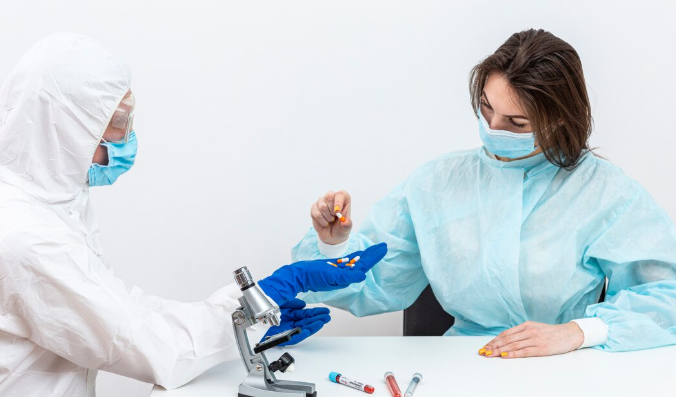
In ways that previous gene editing tools were unable to fully accomplish, CRISPR/Cas9 made this disabling precise and repeatable. The Casgevy procedure is technically complex but conceptually simple: the patient’s own blood is used to harvest stem cells, which are then transported to a lab where CRISPR-Cas9 targets the BCL11A gene. Once chemotherapy has cleared the patient’s existing bone marrow, the modified cells are reinfused into the patient. According to the clinical trial data, 93.5% of evaluable patients avoided severe vaso-occlusive crises for at least twelve months after the edited cells engrafted and started producing healthy red blood cells. Since receiving this experimental therapy for the first time in 2019, Victoria Gray has said that her life is essentially pain-free. No clinical trial statistic can adequately convey the weight that the word “pain-free” carries for someone who spent years in and out of hospitals waiting for the next crisis.
There’s a noteworthy aspect to this therapy’s origin story: it didn’t start in the research division of a pharmaceutical company, but rather in the accumulated curiosity of academic scientists who spent years studying fundamental questions about the development of blood cells. After 25 years in academia, David Altshuler, who oversaw Casgevy’s development at Vertex, said he followed the Orkin Lab’s work for years before deciding to leave academic medicine and attempt to translate these discoveries into treatments. He characterized it as a change in perspective, moving from the question of discovery to the more difficult one of how to create therapy. In the classroom, he had instructed Sankaran. He was certain he wanted to work on BCL11A on his first day at Vertex. Nine years of preclinical and clinical research, carried out in collaboration with CRISPR, separated that first day from FDA approval. Therapeutics is a complex field of study that frequently fails completely and takes decades.
It’s difficult to ignore the uncomfortable tension between this story’s scientific triumph and its other parts. The cost of Casgevy is roughly $2.2 million for each patient. The chemotherapy conditioning phase of the treatment necessitates weeks of hospitalization. It necessitates having access to specialized medical facilities equipped to manage intricate cell therapy procedures. People of African-American descent are disproportionately affected by sickle cell disease, a group that has historically faced structural obstacles to receiving costly, state-of-the-art medical care.
There is therapy. It is a different and much more difficult problem to get it to the patients who need it the most. Even in nations where approval has already been given, Altshuler predicts that it will take an additional five to ten years to achieve maximum access. Today, there are patients who are medically eligible but are practically unable to receive the treatment; this gap merits at least as much attention as the scientific breakthrough that initially produced the therapy.
The long-term picture is still genuinely unclear. The fact that the FDA mandates fifteen years of follow-up monitoring for every patient who receives treatment indicates how relatively new this field is. The design is meant to be lifelong with a single treatment, but the truth is that we don’t yet have fifteen years of data. The modified stem cells stay in the bone marrow and continue to produce healthy red blood cells. The preliminary findings are the most encouraging in recent medical history. The question of whether “promising” eventually turns into “definitive” is still being investigated, patient by patient, in the methodical and thorough manner that good science truly operates. As Altshuler put it, the start of a long journey. It was an amazing start, but it was only the beginning.