

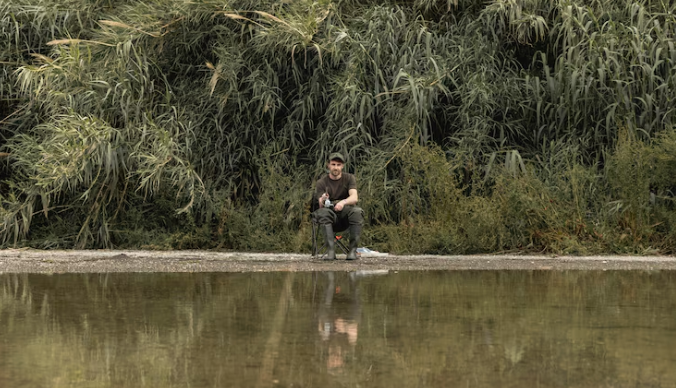
Just outside of Chicago, there’s a stretch of water where the fight seems oddly unseen. Beneath the surface, scientists have been pursuing something that doesn’t belong in the canal, despite its seemingly normal appearance of being flat, gray, and industrial. Asian carp. They have spent decades pushing north through the Mississippi River system, approaching the Great Lakes like a slow, biological tide. They are heavy-bodied, fast-breeding, and constantly on the move.
It’s difficult to ignore how coincidental everything seems. These fish weren’t intentional intruders. They were brought in to clean algae from fish farms in the southern United States during the 1970s. At the time, it seemed sensible. Then came the overflowing ponds, the floods, and the little mistakes that compound over time. The carp slipped into open rivers in some way, silently. They did more than just survive once they were inside. They proliferated violently, changing whole rivers.
| Category | Details |
|---|---|
| Topic | Asian Carp Invasion in North America |
| Key Species | Bighead Carp, Silver Carp, Grass Carp, Black Carp |
| Native Region | East Asia |
| Entry into U.S. | 1970s aquaculture imports |
| Primary Threat Area | Great Lakes Basin |
| Key Organizations | Great Lakes Fishery Commission, U.S. Army Corps of Engineers |
| Economic Risk | ~$7 billion fishing industry |
| Key Waterways | Mississippi River, Lake Michigan |
| Reference | https://www.glfc.org |
Some sections of the river began to feel different by the 1990s. Fishermen discuss it in a particular way—more weight in their nets, but not the kind they desired, and less variety. Asian carp now account for the vast majority of fish biomass in some regions.
That represents a change in a place’s character rather than just a statistic. There is a sense of imbalance when watching footage of silver carp jumping out of the water and occasionally colliding with boaters. It seems as though the ecosystem is responding to pressure that it was not designed to withstand.
The Great Lakes’ edge is where the true anxiety starts. These enormous, frigid, and economically significant lakes sustain a billion-dollar fishing industry. They also carry identity, which is more difficult to measure. Salmon, trout, and peaceful mornings on open water are the foundation of these communities. Although it’s still unclear if Asian carp could establish themselves there, many scientists believe the conditions, particularly in areas like western Lake Erie, might be unsettlingly favorable for them.
The barrier is in place because of this. To prevent fish from moving between the Mississippi basin and the lakes, an electric current pulses through the water deep within the Chicago Sanitary and Ship Canal. In certain respects, it sounds almost futuristic. Officials have referred to it for years as an invisible fence or line of defense. However, carp DNA traces have previously been found beyond it, which raises unsettling concerns. Is the barrier sufficient? Is it purchasing time instead?
There is a perception that the solution is contingent upon the degree of uncertainty that decision-makers are prepared to accept. due to the unequal stakes. Shipping routes, trade flows, and entire regional economies could be disrupted if the waterways were completely closed, dividing the two river systems. Leaving them open runs the risk of ecological rearrangement, which is more subdued but potentially irreversible. Neither choice seems tidy.
Meanwhile, scientists have been conducting experiments that occasionally sound almost desperate. netting activities. sound-absorbing devices underwater. even deliberate poisoning in areas under control. In one instance, scientists have looked into physically pushing carp back downstream with water jets. There’s a sense of improvisation as you watch these efforts take shape—trying several approaches at once and hoping one works.
The difficulty of controlling these fish once they become established adds to the complexity. They are difficult to trick. They essentially starve out native species from the bottom up by eating plankton, the base of aquatic food chains. It’s more akin to erosion than a dramatic takeover. slow, unrelenting, and difficult to stop.
However, the story takes a strange turn. Asian carp have been marketed under different names, transformed into fish cakes, and promoted as sustainable seafood in an effort to rebrand them as food in recent years. It’s a useful—possibly even clever—idea. By generating demand, you can lower the population. However, it poses an unspoken question: is it possible for a market solution to match a biological one?
Early in the morning, not much is visible in the water back along the canal. There’s no indication of what’s moving below. However, the tension is evident in the discussions among scientists, decision-makers, and fishermen. The tone of this battle has slightly changed after decades. Maybe less alarmist. Be more careful. such as those who recognize the scope of the issue but are unsure of how it will be resolved.
In the Great Lakes, the battle against invasive species has lasted for generations. Zebra mussels were the first. Then came round gobies. Every arrival brought about a change. However, Asian carp have a distinct feel. bigger and hungrier. more difficult to ignore.
It’s possible that the barriers, surveillance, and ongoing attention to detail are sufficient to keep the system in place. However, another thought lingers as you stand at the canal’s edge and watch the sluggish current flow north. Invasions don’t always happen all at once. Sometimes they quietly creep in until one day the balance has already changed, and no one can pinpoint the exact moment.