

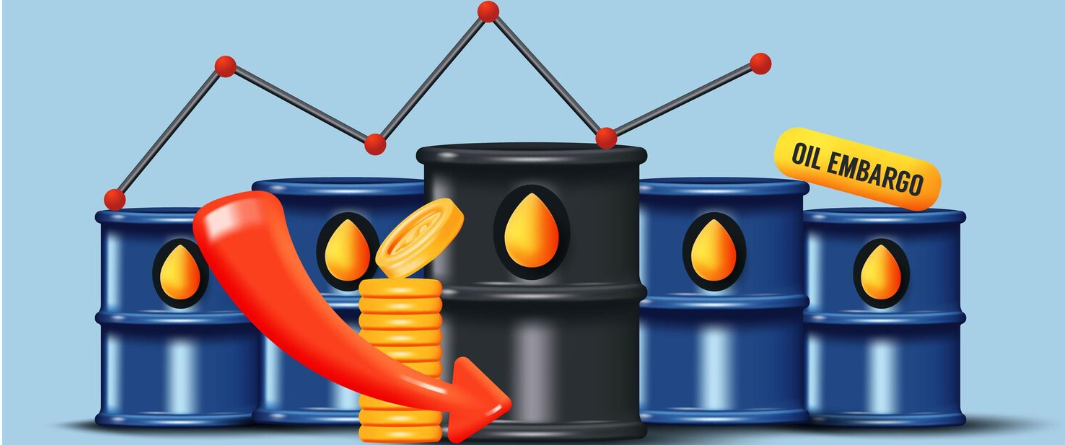
When tensions increase, the oil market smells a certain way. Long before the numbers completely shift, traders can sense it. Phones buzz, screens flicker green, and someone in Singapore or Houston murmurs softly that something is wrong. Today, as oil prices rise to levels that start to cause concern, that sentiment has returned.
Recently, West Texas Intermediate crude surged above $95 per barrel before declining to about $91.79. The global benchmark, Brent crude, is currently trading at about $97.31. The figures appear to be another typical commodity fluctuation on paper. However, there’s a sense that the surge is being driven by something more profound when closely observing the market.
| Category | Information |
|---|---|
| Commodity | Crude Oil (WTI) |
| Current Price | $91.79 per barrel |
| Global Benchmark | Brent Crude: $97.31 per barrel |
| Recent Change | +5.21% daily increase |
| Key Trading Hub | Cushing, Oklahoma, United States |
| Major Supply Route | Strait of Hormuz |
| Strategic Reserve Release | 400 million barrels (IEA coordinated action) |
| Global Strategic Reserves | Approx. 1.2 billion barrels |
| U.S. Strategic Petroleum Reserve | About 416 million barrels |
| Reference Website | https://www.iea.org |
The narrow stretch of water known as the Strait of Hormuz is largely to blame for the anxiety. On a calm day, it looks like just another maritime lane in satellite photos. However, about 20% of the world’s oil passes via that route. Global energy markets are instantly alerted when tankers slow down there.
There have been reports of multiple ships being hit by projectiles close to Iranian waters in the last week. Since the conflict escalated, at least fourteen ships have been damaged, according to maritime security firms. Following the targeting of two tankers, Iraq even suspended operations at some oil terminals. One can practically imagine captains hesitating before crossing the strait as they watch shipping maps change in real time. Seldom do markets enjoy hesitancy.
Despite governments’ efforts to quell the panic, investors appear to think the supply risk is real enough to drive up prices. The largest coordinated release of strategic reserves in the International Energy Agency’s history was just approved. Approximately 400 million barrels will be added to the market by member countries. That sounds really big. And it is in terms of politics.
However, instead of considering total barrels, energy traders typically consider daily supply flows. The daily consumption of oil worldwide is close to 100 million barrels. The reserve release might only temporarily stabilize the market in that situation. The intervention seems to buy breathing room rather than a long-term fix.
In situations such as these, passing trading desks reveals something subtle. Refreshing tanker tracking data, analysts lean closer to their monitors. Every hour, there are news alerts about naval activity or missile strikes. It becomes evident that geopolitics is traded on the market just as much as petroleum.
According to reports, Iran has informed intermediaries that before discussing a ceasefire, the United States must ensure that neither Washington nor Israel will launch any more attacks. It’s unclear if such a pledge is politically feasible. Oil traders seldom wait patiently, and diplomacy frequently moves more slowly than commodity markets.
Production figures, meanwhile, are still subtly changing in the background. The United States continues to be the world’s largest oil producer, producing more than 13.6 million barrels of crude per day. Russia pumps about 10 million barrels per day, while Saudi Arabia pumps about 10.1 million. The global supply balance is typically anchored by these numbers. However, when shipping routes are uncertain, even robust production figures are unable to calm markets.
A reminder is provided by history. The 1970s oil crises started out as a fear of disruption rather than an immediate shortage. Long before gas stations ran out of fuel, prices skyrocketed. While observing the current market trends, some analysts subtly bring up those decades once more.
The psychological component is another. Earlier this week, oil briefly rose above $119 before falling. The traders’ memories of that spike persisted. The possibility becomes easier to envision once markets see triple-digit prices, even for a brief period of time. Uncertainty, however, is reciprocal.
Prices may decrease if tanker traffic through the Strait of Hormuz resumes without incident in the upcoming weeks. Some analysts suspect crude might settle somewhere in the $80–$90 range again. However, a move above $100 appears more likely if the dispute continues or intensifies.
The energy markets are prone to fluctuating between panic and complacency. The pendulum seems to be swinging in the direction of worry at the moment.
It’s difficult to ignore how precarious the balance is as you watch the charts develop. The world is reminded of how heavily modern economies still rely on that dark, volatile liquid flowing beneath the ground when a few damaged ships, a stalled negotiation, or an abrupt blockage of a narrow waterway cause the price of oil to start rising once more.