

Imagine a man in a wetsuit, face down in a shallow subterranean stream, his headlamp beam picking out shapes along the rocky floor of a flooded cave in Texas, his goggles pressed against the chilly water. No equipment for excavation. Not a drill. All you need is a pair of hands, a snorkel, and the patience to crawl in the dark along a streambed. That’s how University of Texas at Austin paleontologist John Moretti ended up gazing at hundreds of bones strewn all over the floor of Bender’s Cave in Comal County. He later remarked, “It was just bones all over the floor,” and the simplicity of that statement somehow makes it more striking than any dramatic flourish could.
The discovery that Moretti made from that cave stream, which has since been published in the journal Quaternary Research, is the kind that causes other paleontologists to subtly reconsider their presumptions. The fossils include pieces of armor and shell from a giant tortoise and a pampathere, a relative of armadillos that grew to be about the size of a lion. Additionally, there are pieces of mastodon, saber-tooth cat bones, camel remains, and claws from a giant ground sloth. These animals had never before been recorded in Central Texas. It’s not that they weren’t there—apparently they were—but rather that no one had yet considered snorkeling in the appropriate cave to locate them.
| Key Information: Bender’s Cave Ice Age Fossil Discovery — Central Texas, 2026 | Details |
|---|---|
| Discovery Site | Bender’s Cave, Comal County, Central Texas (private property) |
| Lead Researcher | John Moretti, Paleontologist — University of Texas at Austin |
| Co-Author | John Young, local caver and collaborator |
| Study Published In | Quaternary Research — March 2026 |
| Institution | UT Jackson School of Geosciences, University of Texas at Austin |
| Number of Field Trips | Six trips, March 2023 to November 2024 |
| Fossil Collection Zones | 21 distinct zones within the cave |
| Key Fossils Discovered | Giant tortoise, pampathere (lion-sized armadillo relative), giant ground sloth (Megalonyx), saber-tooth cats, camels, mastodons |
| Estimated Age of Fossils | Approximately 100,000 years old — last interglacial warm period |
| How Fossils Entered Cave | Swept in through sinkholes during ancient flooding and erosion events |
| Fossil Condition | Polished, rounded, uniformly rust-red mineralized — suggesting simultaneous deposit |
| Cave Type | Water cave — active underground stream, conduit for groundwater |
| Significance | First paleontological study of a Texas water cave; species never before recorded in Central Texas |
| External Expert Comment | David Ledesma, Assistant Professor, St. Edward’s University |
| Dating Challenge | Lack of geologic material makes precise carbon dating difficult |
For the better part of a century, paleontologists have thoroughly mapped Central Texas. For decades, scientists have been excavating and cataloging Ice Age fossils in this area. On the surface, it seemed reasonable to assume that if something important had resided here, it would have been discovered by now. That reasoning is subtly but firmly disrupted by Bender’s Cave. Bender’s Cave landed with known interglacial sites from the Dallas region and Gulf Coast rather than the Central Texas sites, according to Moretti’s statistical analysis that grouped Texas Ice Age sites based on the similarity of their fossil assemblages. It’s not a minor detail. An entire animal community is being repositioned both geographically and temporally.
These fossils are thought to be from the last interglacial period, which was a warm period that took place between glacial advances about 100,000 years ago. Compared to the open grassland it became during the colder glacial periods, Central Texas was probably warmer and more forested during that period. Animals that live in forests, such as mastodons and giant ground sloths, would have had something to cope with here.
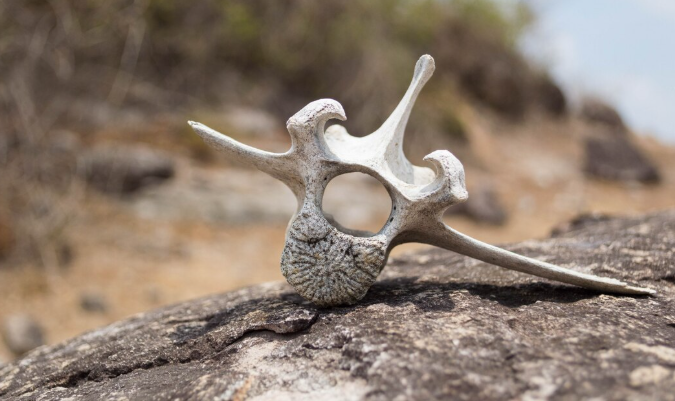
The pampathere and the giant tortoise, which both required warmth to survive, would also need the kind of warmth that a Texas summer still provides, even though the surroundings were very different from what they are today. The bones might be the remains of an entire animal community that flourished during that period and left virtually no other evidence in the local record up to this point.
The way the fossils arrived is what makes this discovery so fascinating. Unlike the remains that archaeologists usually discover at locations where animals perished on the surface, the bones were not interred. Rather, they fell through the earth and settled along the underground stream over thousands of years after being carried into the cave by sinkholes during prehistoric floods. The fossils’ uniform rusty-red mineral color and comparable surface polish indicate that they entered the cave roughly at the same time, most likely during the same flooding event. That consistency is both a benefit and a challenge. Although it suggests coherence in the assemblage, the lack of a surrounding sediment matrix to cleanly sample for carbon or other dating methods makes precise dating challenging.
There are about 600 other water caves in Central Texas, and it’s difficult not to wonder what else might be there, just waiting for someone to put on a wetsuit and take a look. Although water caves have long been discussed by cavers as fossil-rich settings, Moretti has admitted that very few of them have been formally investigated for their paleontological significance. The first was Bender’s Cave. To put it mildly, the results indicate that the others are worth investigating. The discovery was truly exciting, according to David Ledesma, an assistant professor at St. Edward’s University who studies how small animals reacted to changes in the climate during the Ice Age. He pointed out that some of the recovered species weren’t anticipated to occur in this area of Texas at all.
This has wider implications than just the particular species and bones. The regional ecological history is more complex than the current record indicated if the last interglacial period in Central Texas supported such a unique and hitherto undiscovered animal community, which included forest species and warm-climate giants that vanished when the climate cooled. It’s possible that something richer, stranger, and more varied took the place of the grassland that defined Central Texas during the colder glacial periods. Moretti carefully explained: “It’s a new window into the past and into a landscape, environment, and animal community that we haven’t observed in this part of Texas before.” That’s measured scientific language, but what it describes is a lost world that a man with a snorkel and excellent vision discovered face-down in a cave stream.