

A Tuesday afternoon drive through Burbank will reveal something that five years ago would have been unimaginable. There is silence in the studio lots. Parking spots, which are infamously hard to come by, historically sought after, and the focus of decades’ worth of industry rumors, are simple to locate. The writers’ rooms that were once bustling with debate and caffeine are either completely empty or only partially filled. When a production moved in for a week, the craft services trucks that used to line residential streets in Silver Lake and Los Feliz stopped showing up. It’s not a tranquil silence. It’s the particular quiet of an industry that either hasn’t yet figured out what it’s becoming or has made a decision in private but hasn’t made it public.
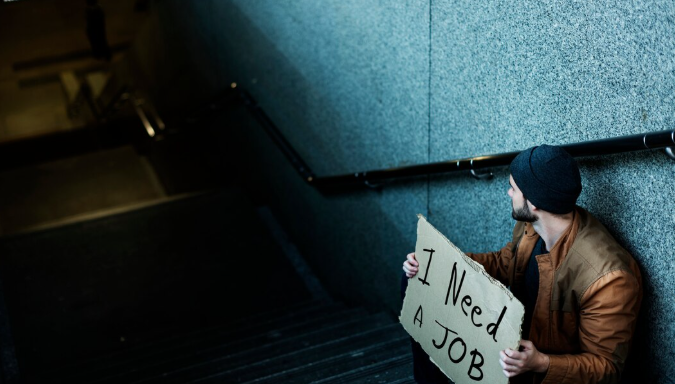
Over the last three years, Hollywood has lost between 41,000 and 42,000 film and television jobs in Los Angeles County. That represents about 25% of the entire entertainment industry in the area. As of August 2024, the unemployment rate in the film and television industries in the United States was 12.5%. However, the majority of those in the industry believe the true figure is much higher because many film workers—freelancers, independent contractors, day players, and the vast invisible infrastructure of the business—do not qualify for unemployment benefits or have already used them up after months without a call. With the exception of the pandemic, those who keep a close eye on these things say that 2024 was the worst year ever for on-location filming in Los Angeles. According to early 2025 data, this year might be even worse.
Hollywood Employment Crisis — Key Facts & Context
| Crisis Status | Ongoing & Deepening |
| Total Jobs Lost (LA County, 3 years) | ~41,000–42,000 film and TV jobs — roughly 25% of the entertainment workforce |
| Film/TV Unemployment Rate (US, Aug 2024) | 12.5% (widely believed to be higher due to underreporting) |
| US Production Volume Drop | Down ~40% in Q2 2024 vs. same period in 2022 (ProdPro data) |
| Global Production Drop | ~20% decline over same period |
| Writers’ Available Gigs Drop | 42% decline from 2023 to 2024 |
| Actors Currently Unemployed | ~130,000 (of ~130,000 SAG-AFTRA members) |
| Scripted Series at Peak | ~600 live-action scripted series airing simultaneously (a few years ago) |
| Strikes Period | May – November 2023 (WGA + SAG-AFTRA; first dual strike since 1960s) |
| Direct Economic Cost of Strikes (UCLA est.) | ~$1.4B – $1.6B (direct losses; widely cited $3B+ figure described as inflated) |
| Amazon Automation Target | Plans to automate ~75% of operational workforce (per NYT documents) |
| Amazon AI Restructuring | Cutting jobs across Prime Video, Twitch, Amazon MGM Studios |
| On-Location Filming (LA, 2025) | 2024 worst year on record (excl. COVID); Q1 2025 tracking worse (FilmLA) |
| Dependent Workforce (Southern California) | ~1 million people whose livelihoods depend on traditional film/TV (incl. agents, lawyers, craft services, marketing) |
| Production Leaving California | Drawn to tax incentives in Georgia, New York, UK, Canada, Australia |
| Key AI Tools Entering Production | OpenAI Sora 2, ChatGPT-5, generative video and script tools |
| Wall Street Pressure | Streaming profitability demands driving studios toward automation and cost-cutting over content volume |
| Broader Industry Label | “Content bubble” burst — Netflix recovered; most other studios still struggling toward profitability |
| Government Response | Largely absent; LA Mayor flagged concern; no significant federal intervention |
People in the industry in particular have an innate tendency to link this to the strikes. The WGA and SAG-AFTRA walkouts in 2023, the first time both unions went on strike at the same time since the 1960s, caused production to be halted for months and raised concerns about residuals, AI protections, and the conditions under which human creative labor would endure in a sector that is becoming more and more interested in doing things more cheaply. For many participants, the settlements represented a partial victory because the strikes were genuine and the concerns were valid. However, the employment figures since then don’t appear to be the result of a labor dispute that was settled. They appear to be structural. something that didn’t begin with the strikes and won’t stop because of them.
The majority of industry analysts point to the streaming boom first, and they are right. Wall Street rewarded subscriber growth above all else for roughly ten years, starting in 2012 and picking up speed through the mid-2010s. Because content drove subscriptions and subscriptions drove stock prices, Netflix, Amazon, Disney, HBO, and Paramount all invested heavily in content. Approximately 600 scripted live-action series were simultaneously airing in the US at its height.
The math was always a bit surreal. It necessitated an almost limitless demand for original content, the belief that consumers would continue to pay for an increasing number of services, and stock markets that consistently prioritized expansion over profit. When those presumptions were disproved—when Netflix faltered in 2022, when the share prices of all other streamers followed, and when Wall Street shifted from rewarding growth to demanding profitability—the amount spent on content fell nearly instantly. According to one industry analyst, “the air came out of the bubble.”
However, this is still not entirely explained by the strikes and the streaming correction taken together. The story’s more unsettling aspect is what silently and with little public notice is taking the place of human labor in the production pipeline. Amazon has outlined a long-term internal plan to replace about 75% of its operational workforce with robots and automation, according to documents obtained by the New York Times. Employees at Prime Video, Twitch, and Amazon MGM Studios have already been laid off by the company under what executives refer to as a “refocus around AI investment.” In actuality, that phrase means that tasks previously performed by writers, editors, artists, and coordinators are starting to be handled by algorithms. Not everything. Not just yet. However, it is sufficient that the direction is clear and the trend line is visible.
Observing all of this build up gives the impression that the industry is undergoing a change that it hasn’t yet fully identified. Contracts with AI protections were created as a result of the strikes, and while those protections are genuine, they are also up against a technological current that is advancing more quickly than collective bargaining agreements typically account for. AI-driven visual effects pipelines, generative script tools, and OpenAI’s Sora 2 are not hypothetical. They are being used, tested on actual productions, and assessed by actual executives who are asking actual questions about how many fewer employees a particular project needs to hire. In 2023, writers went on strike to demand provisions that would impede this process. Whether the clauses they won are adequate to accomplish that or if the speed of the tools has already surpassed the contracts intended to regulate them is still up for debate.
Behind the numbers, there are human costs that are worth considering. By late 2024, Michael Fortin, an aerial cinematographer whose drone work on Netflix and Amazon sets helped support his family in Huntington Beach, was forced to move to Las Vegas because Southern California was no longer financially feasible. Two years ago, the man had never considered taking his family out to dinner, but now he was wondering if he could afford a value meal. His narrative isn’t particularly compelling. It tells the tale of tens of thousands of workers in the industry’s support network, including editors, makeup artists, location scouts, publicists, and accountants, whose jobs were dependent on productions that are no longer occurring at the volume that once supported them.
As studios discover sustainable business models, some of this production may return. It’s also possible that the Hollywood that once employed a million people in Southern California is just not reappearing. These days, the parking lots’ ease of access feels more like a sneak peek at something long-term than a brief lull.