

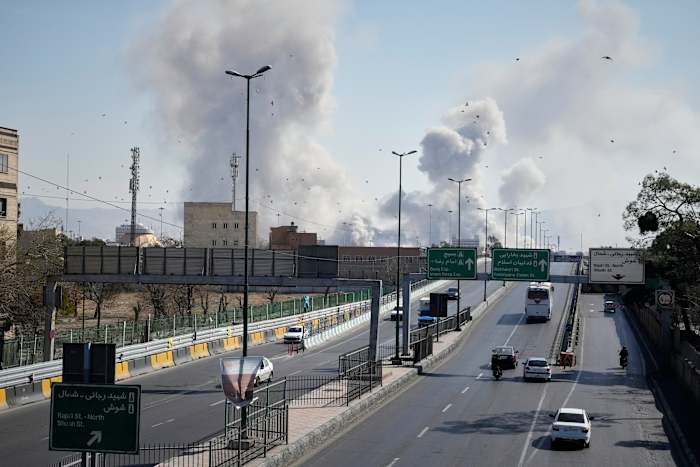
Iran launched a fresh wave of attacks against Israel, American bases, and neighboring countries on Thursday, escalating a conflict that began six days earlier with coordinated U.S. and Israeli strikes. The expanding Iran-Israel conflict now spans multiple regions, with Iranian officials warning the United States would “bitterly regret” sinking an Iranian warship and demanding retribution following the death of Supreme Leader Ayatollah Ali Khamenei in initial strikes.
According to officials in affected countries, the war has claimed more than 1,200 lives in Iran, over 70 in Lebanon, and approximately a dozen in Israel. Meanwhile, the conflict has disrupted global oil supplies, halted international shipping routes, and stranded hundreds of thousands of travelers across the Middle East.
Iran-Israel Conflict Expands Beyond the Gulf Region
The Israeli military announced multiple incoming missile attacks on Thursday, with air raid sirens sounding in Tel Aviv and Jerusalem. Additionally, several Gulf nations reported coming under fire from Iranian forces, marking a significant expansion of the combat zone.
In Abu Dhabi, authorities said a drone was intercepted near Al Dhafra Air Base, which hosts U.S. forces, with falling shrapnel wounding six people. Qatar evacuated residents near the U.S. Embassy in Doha as a precautionary measure and later reported a missile attack on the city. Saudi Arabia confirmed destroying a drone in its province bordering Jordan.
However, the conflict spread even further when Azerbaijan accused Iran of attacking it with drones on Thursday. A drone crashed near the airport in Nakhchivan, while another fell near a school, injuring two civilians, according to Azerbaijan’s Foreign Ministry. Iran’s general staff of the armed forces denied launching any drone toward the country.
Commercial Shipping Under Threat
A tanker reportedly came under attack off the coast of Kuwait early Thursday, according to the United Kingdom Maritime Trade Operations Center. The incident expanded the danger zone for commercial shipping, with vessels previously attacked in the Gulf of Oman and the Strait of Hormuz since Saturday.
The maritime attacks have caused oil prices to soar, as approximately one-fifth of the world’s oil passes through the Strait of Hormuz. While prices briefly declined Wednesday, they resumed climbing Thursday amid continued instability in the region.
Iranian Officials Issue Defiant Warnings
Iranian Foreign Minister Abbas Araghchi condemned the U.S. Navy for what he called “an atrocity at sea” after an American submarine torpedoed the Iranian frigate IRIS Dena in the Indian Ocean. The attack killed at least 87 Iranian sailors, with Sri Lankan authorities recovering bodies while rescuing 32 crew members.
Araghchi warned on social media that the United States would “bitterly regret” the precedent it had set. In contrast, Ayatollah Abdollah Javadi Amoli issued a rare call for violence on state television, demanding both Israeli and “Trump’s blood.”
The sunk Iranian warship had been returning from multinational exercises hosted by the Indian navy that both Iran and the U.S. had participated in. U.S. Defense Secretary Pete Hegseth confirmed Wednesday that an American submarine had sunk the vessel with a torpedo.
Israeli Strikes Target Hezbollah and Iranian Military Sites
The Israeli military reported striking 80 targets in Lebanon over the past 24 hours, including several Hezbollah command centers in Beirut. Among Thursday’s casualties were two people killed in the Beddawi refugee camp in Tripoli and three on a coastal highway, authorities said.
Israel also announced hitting long-range ballistic missile launch sites and other military targets inside Iran. U.S. and Israeli military officials indicate that launches from Iran have declined as their coordinated attacks have destroyed ballistic missiles, launchers, and drones.
Casualties and Humanitarian Impact
Iran’s Foundation of Martyrs and Veterans Affairs reported at least 1,230 deaths in the country on Thursday. The conflict has also claimed eleven Israeli lives and six U.S. troops, including a major whose identity was released Wednesday.
Israel’s Homefront Command announced it would ease some restrictions Thursday, allowing workplaces with nearby shelters to reopen, though schools would remain closed. Nevertheless, the exact aims and timelines of the U.S. and Israeli military campaign have repeatedly shifted, with the conflict increasingly appearing open-ended despite suggestions that toppling Iran’s government remains a goal.
Authorities have not confirmed when the current military operations might conclude or whether diplomatic efforts are underway to de-escalate the rapidly expanding regional conflict.