

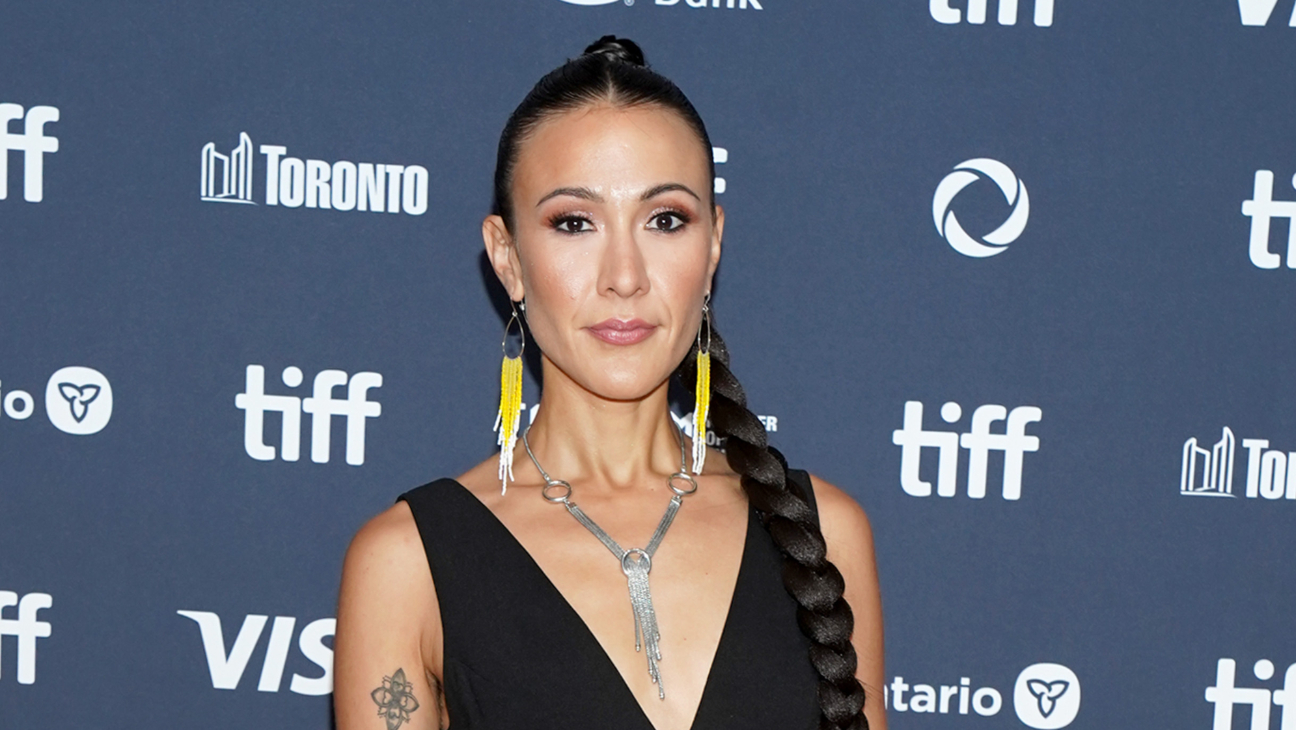
Canadian actor Elle-Máijá Tailfeathers has announced she will return her Toronto Film Critics Association award after organizers cut a pro-Palestine statement from her acceptance speech at Monday’s ceremony. The actress, who won Best Supporting Performance in a Canadian Film for her role in “Sweet Angel Baby,” says she is “disgusted and ashamed” by what she describes as an act of censorship.
Tailfeathers was unable to attend the March 2 TFCA Awards Gala in person and submitted a video acceptance speech. The video included a statement expressing solidarity with Palestine and acknowledging “this ongoing genocide,” along with thanks to industry members who have spoken out on the issue. That portion was removed from the awards ceremony broadcast.
Actor Condemns Award Speech Censorship
In a strongly worded email sent to TFCA members on Wednesday, Tailfeathers condemned the organization for censoring her remarks. According to her letter, the decision to edit her speech was made “with the paternalistic excuse that I somehow needed protection from my own words.” She emphasized that she specifically included those statements in her video precisely because she would not be present to deliver them in person.
The actor declared she could not in good conscience accept the award “now that it has been tainted by censorship.” She rejected the possibility of an apology, stating that “the moral injury I carry with me cannot be undone.” Tailfeathers added that neutrality itself constitutes a form of violence and that choosing to remain apolitical is inherently a political stance.
Film Critics President Resigns Following Controversy
TFCA president Johanna Schneller responded to the backlash by announcing her resignation from the organization’s leadership. However, Schneller maintained that the speech edits were made purely for time management purposes rather than political reasons. According to her statement, Tailfeathers’ speech along with those of other recipients was shortened “to maintain the timing of the awards show.”
Schneller emphasized that the decision was hers alone as president and that the organization was proud to recognize Tailfeathers’ deserving work. She noted that the TFCA encourages all winners to share their full remarks on personal platforms. The outgoing president stressed that film serves as a powerful space for dialogue and that recognizing diverse artists is essential to fostering cultural appreciation.
Latest Incident in String of Award Ceremony Controversies
The Toronto Film Critics Association controversy represents the latest flashpoint involving arts organizations and Israel-Palestine conflict references at award ceremonies. Additionally, similar incidents have occurred at major international film events in recent months. Last month, a German cabinet minister walked out of the Berlinale awards ceremony after Syrian-Palestinian director Abdallah Al-Khatib called out governments for “genocide in Gaza,” nearly forcing out the Berlin Film Festival’s leadership.
Meanwhile, the BBC faced criticism in February for cutting “free Palestine” from director Akinola Davies Jr.’s BAFTA acceptance speech broadcast. That controversy was compounded by the network’s decision to air involuntary slurs from a Tourette’s sufferer despite having broadcast delay capabilities. These incidents reflect ongoing tensions surrounding political speech at entertainment industry events.
Tailfeathers’ Career and Industry Impact
Beyond her performance in “Sweet Angel Baby,” which premiered at TIFF in 2024, Tailfeathers has earned recognition as both a director and producer. She is best known for co-directing “The Body Remembers When the World Broke Open” with Kathleen Hepburn in 2019. That film won the 2020 Canadian Screen Award for Best Director and the TFCA prize for Best Canadian Film, making the current controversy particularly significant given her previous relationship with the organization.
In her letter, Tailfeathers revealed she left social media two years ago following harassment from industry professionals over her Palestine advocacy. She also referenced backdoor conversations about her views that have likely impacted her career opportunities. The actress, who identifies as a queer Indigenous woman, drew parallels between land acknowledgements on stolen Indigenous land in Canada and what she characterized as future claims of Palestinian solidarity by those currently remaining silent.
The TFCA has not announced whether it will accept Tailfeathers’ returned award or implement any policy changes regarding political speech at future ceremonies. The organization’s response to this controversy and any potential membership reaction to Schneller’s resignation remain to be seen.