

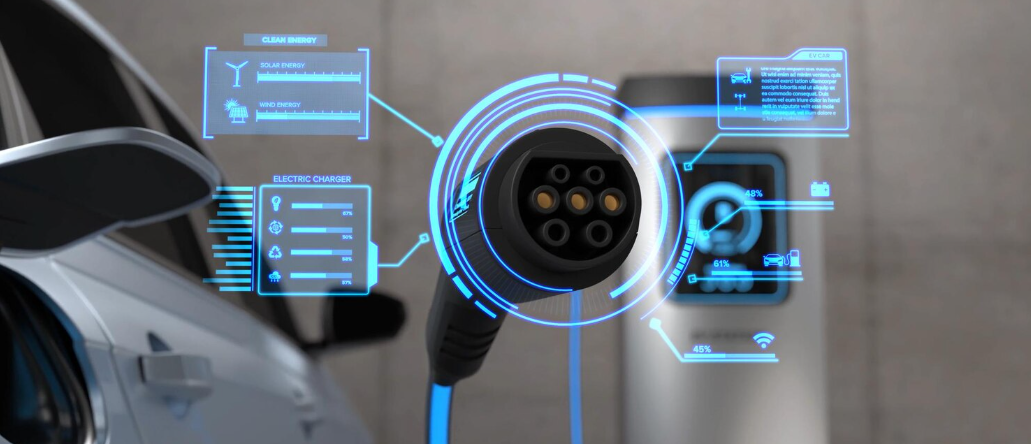
Batteries are a common topic of discussion when discussing electric vehicles. The answer becomes clear when you walk through an EV factory floor, where rows of incomplete cars are arranged under bright lights. Even though the cars and motors are sophisticated, practically everything is still determined by the battery. range, price, security, and even public confidence.
But lately, researchers from Canada to Japan have been subtly hinting at something intriguing while working in materials labs. Lithium-ion batteries may finally start to lose their hold on the market thanks to a new generation of batteries called solid-state systems and sodium-ion designs. If the shift does occur, it might feel more like a slow turn of the wheel than a sharp jump.
| Category | Details |
|---|---|
| Key Research Field | Solid-State and Sodium-Ion Battery Technology |
| Leading Researchers | Eric Jianfeng Cheng, Yang Zhao and international materials science teams |
| Key Institutions | Tohoku University Advanced Institute for Materials Research, Western University |
| Core Innovation | Inorganic solid electrolytes replacing flammable liquid electrolytes |
| Battery Types Studied | Solid-state lithium batteries, sodium-ion batteries, modern nickel-iron batteries |
| Key Materials | Sulfides, oxides, hydroborates, halides, sulfur-chlorine electrolytes |
| Potential Benefits | Higher safety, lower cost, longer lifespan, improved energy storage |
| Industry Interest | EV manufacturers and battery producers worldwide |
| Example Companies Exploring Alternatives | CATL, BYD |
| Reference Source | https://www.nature.com/articles/d41586-021-02695-8 |
Today’s electric cars are mostly powered by lithium-ion batteries. The chemistry is used in about 70% of rechargeable batteries worldwide. Although the technology is effective, it has drawbacks. Even though battery fires are uncommon, they still make headlines because the cells contain flammable liquid electrolytes. The phenomenon is known to engineers as “thermal runaway,” which sounds strangely serene for something that can turn an automobile battery into a blowtorch.
Solid-state batteries attempt to address that by completely eliminating the liquid. They transfer ions through the battery using a solid substance rather than a flammable fluid. These solids frequently contain combinations of sulfur, chlorine, oxides, or halides in research labs. It can be similar to hearing a chef explain an experimental recipe when you watch a materials scientist describe the process—precise temperatures, carefully calibrated ingredients, and minute changes that alter everything.
Researchers at Tohoku University’s Advanced Institute for Materials Research have been investigating inorganic solid electrolytes that permit ions to flow nearly as readily as they do in liquids. That is not insignificant. The electrolyte needs to conduct ions fast, maintain stability while charging, and refrain from reacting with the electrodes of the battery. It has been incredibly challenging to accomplish all three at once.
However, advancements continue to be made. After hundreds of charge cycles, some recent prototypes retain a Coulombic efficiency of over 99%. To put it simply, almost all of the energy stored in the battery is retained. That level of efficiency is quietly exciting for engineers creating electric vehicles.
The story has another twist, and it has to do with sodium, an element so ubiquitous that it can be found in regular table salt. Sodium, which is far more readily available and less expensive than lithium, is used in sodium-ion batteries. This is important because the price of EV batteries still makes up a sizable portion of the car’s cost. Cheaper chemistry may allow millions more drivers to enter the market, according to investors.
However, there are trade-offs with sodium. In the past, batteries have stored less energy because the element has less electrochemical power than lithium. Additionally, early sodium-ion cells deteriorated more quickly. For years, those limitations kept them on the sidelines.
According to recent studies, the gap might be closing. Scientists have started to increase stability and lifespan by combining sodium with solid-state electrolytes, which are frequently sulfur-based substances that facilitate ion mobility. Some sodium batteries can now withstand hundreds of charge cycles in controlled tests without losing their high efficiency. Though not flawless, it is unquestionably superior to earlier designs.
It seems like the field is experimenting in multiple directions at once when looking through the data. High energy density and safety are promised by solid-state lithium batteries. Lower costs are promised by sodium-ion designs. In the meantime, a reimagined concept from the past—Thomas Edison’s nickel-iron battery—has made a comeback in the form of contemporary nanotechnology, charging in a matter of seconds and enduring up to 12,000 cycles.
It’s difficult to ignore how frequently outdated inventions resurface. In an attempt to power the first electric cars, Edison patented his nickel-iron battery in 1901. The concept was soon forgotten as gasoline engines took center stage. More than a century later, scientists are reexamining it with graphene and nanoscale metal clusters, extracting new functionality from an idea that was previously thought to be out of date.
The larger electric vehicle market is keeping a close eye on this. Automakers are rushing to secure supply chains and hedge their bets outside of battery labs. Sodium-ion systems are already being tested by companies like BYD and CATL, and some anticipate the introduction of early models utilizing the chemistry in automobiles within the next few years.
There is still a sense of caution. Large-scale production of these batteries is still a challenging issue. Under controlled circumstances, laboratory prototypes behave flawlessly, but factories operate in a much messier world of supply constraints, cost pressures, and engineering compromises.
There is a subtle conflict between optimism and realism as the field develops. Although science is advancing more quickly than it did ten years ago, many promising technologies have been humbled by the transition from lab bench to highway.
However, this time the momentum feels different. Solid electrolytes are getting better. The chemistry of sodium is developing. Conventional concepts are being rethought.
The next battery may already be charging somewhere within those bustling research facilities, which are filled with glowing test cells, vacuum chambers, and microscopes.