

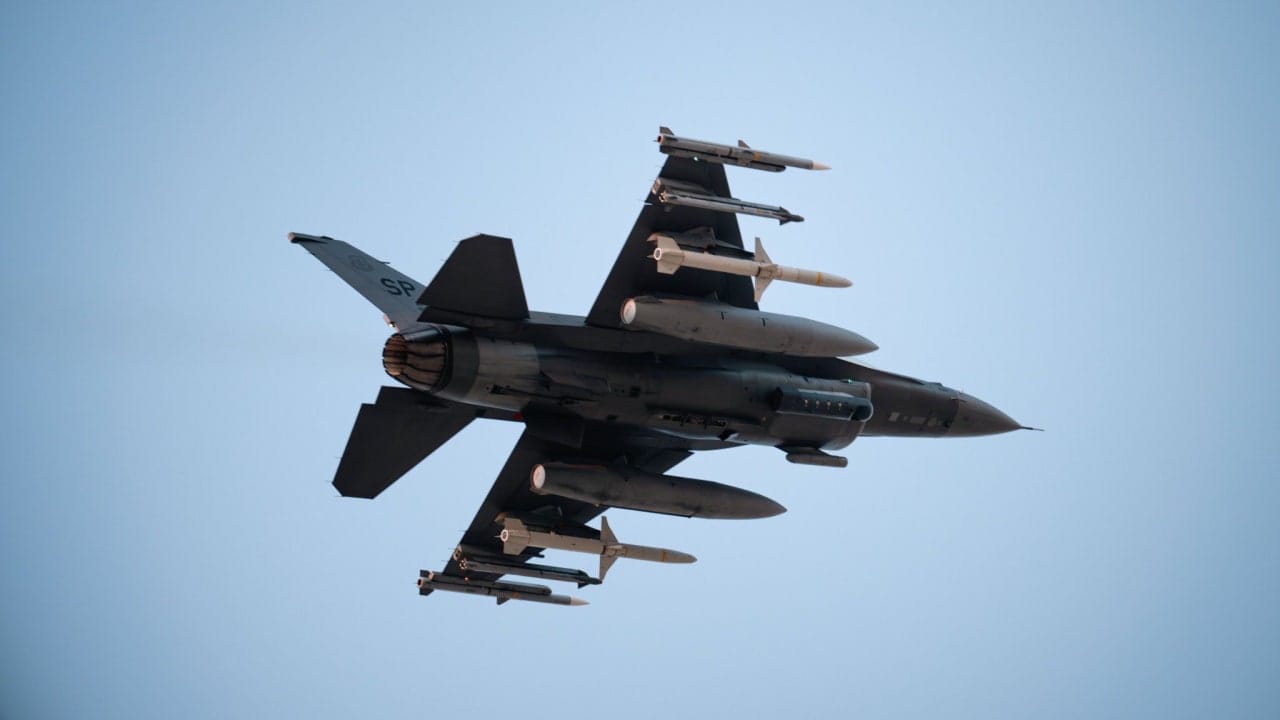
Operation Roaring Lion has brought advanced precision-strike technologies to the forefront of modern warfare, with Rafael Advanced Defense Systems’ SPICE munitions family and LITENING targeting pods enabling high-accuracy strikes in heavily contested environments. According to details published by the Israel Air Force, these precision-strike technologies are defining the current air and maritime campaign against Iran, allowing both the IAF and United States Air Force to engage targets with minimal collateral damage even in areas with heavy electronic jamming such as Tehran.
The systems represent a significant evolution in airpower capability, combining electro-optical guidance, artificial intelligence, and real-time targeting to execute long-range missions against high-value targets. Defense industry officials indicate that production lines are operating continuously to meet operational demand as the campaign intensifies.
SPICE Munitions Enable Precision Strike Capabilities
The SPICE family comprises multiple variants designed for different mission requirements, according to Rafael Advanced Defense Systems. The SPICE 2000 carries a 2,000-pound warhead and can glide approximately 60 kilometers, while the SPICE 1000 extends that range to about 100 kilometers using deployable wings.
However, the SPICE 250 represents a different approach entirely. This lightweight variant enables man-in-the-loop control, allowing navigators to redirect the weapon in real time or abort strikes by guiding it to safe impact areas, making it particularly effective against mobile targets such as missile launchers and air-defense batteries.
The technology behind these precision-strike technologies relies on image-matching rather than GPS navigation, a critical capability in environments where satellite signals are jammed. The weapon compares a reference image of the target to what its seeker observes during flight, ensuring accuracy even when GPS is unavailable or unreliable.
AI-Driven Targeting Systems
According to defense industry sources, the underlying artificial intelligence and machine learning systems have been operational for over 20 years. These technologies enable pilots to strike specific floors of buildings or precise aim points with single munitions, significantly reducing unintended damage.
Additionally, the weapons have been employed extensively in Yemen against maritime targets including explosive-laden boats in coastal harbors. Videos published by the IAF have shown SPICE munitions used during Operation Roaring Lion, including footage filmed from the weapon’s perspective before impact.
Images released Thursday also showed variants of Rafael’s Ice Breaker, an air-launched long-range attack system unveiled in 2022. The company describes it as providing “surgical, pinpoint precision strike capabilities from standoff ranges,” though Rafael declined to comment on specific operational employment.
LITENING Pod Expands Operational Flexibility
Meanwhile, Rafael’s LITENING targeting pod has become an essential sensor platform across multiple aircraft types. The pod is integrated on over 26 different aircraft platforms, including F-16, F-15, F/A-18, Eurofighter Typhoon, and even transport aircraft, with more than 35 countries operating the system.
The sensor suite includes mid-wave and short-wave infrared, high-resolution color imaging, and dual-wavelength laser designation capabilities. An optional synthetic aperture radar provides all-weather imaging capability, giving pilots the ability to identify and engage targets in poor visibility conditions.
In contrast to traditional targeting systems, LITENING 5 supports both air-to-ground and air-to-air missions, including ground moving target indication and automatic target recognition. Recent combat footage shows Israeli, American, and British aircraft using LITENING to detect and destroy hostile drones, often while flying at low altitude.
Sustaining High-Tempo Operations
With the IDF reporting that over 5,000 munitions have been used since the start of the operation, concerns have emerged about potential supply constraints. However, Rafael’s international partnerships, notably with Lockheed Martin and Hensoldt, are said to have accelerated manufacturing and integration of these systems.
Rafael spokesperson told Defense & Tech by The Jerusalem Post that the company is “engaged in continuous and intensive activity in support of the operational efforts of Operation Roaring Lion,” while remaining focused on providing required operational responses to the IDF and defense establishment.
Together, the SPICE family and LITENING pod illustrate a broader shift in modern airpower toward weapons that operate independently of GPS, discriminate between targets with high precision, and adapt to changing battlefield conditions. These capabilities allow aircraft to engage more targets per sortie while maintaining accuracy during deep-range missions in contested electromagnetic environments.
As the operation continues, the next challenge will be how quickly these precision-strike technologies can evolve as adversaries improve their own electronic warfare and air-defense systems. The pace of technological adaptation on both sides will likely shape the character of future air campaigns.