

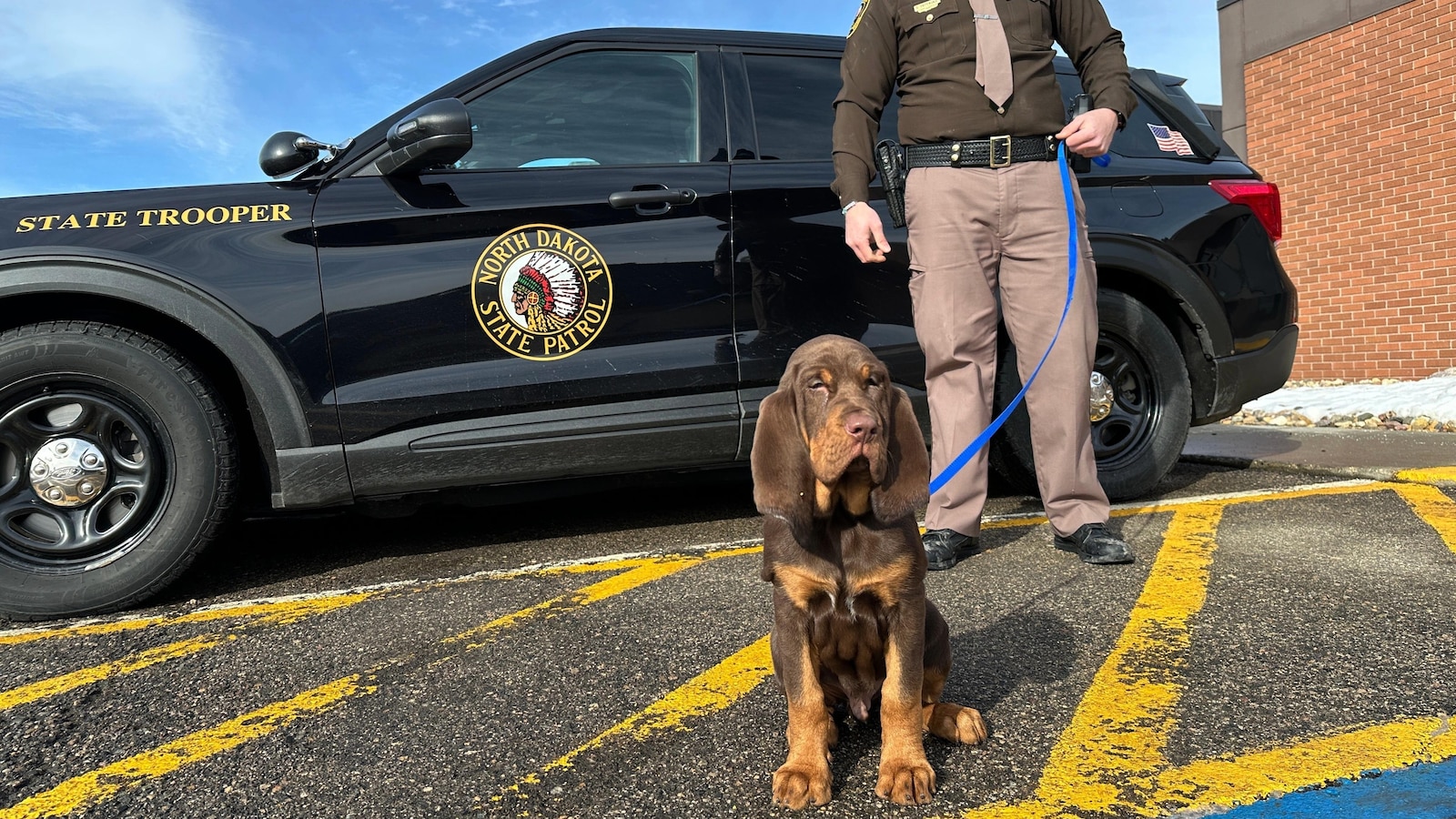
The North Dakota Highway Patrol has welcomed its newest four-legged recruit, a 12-week-old bloodhound puppy named Beau, who is joining an elite team of trailing dogs used to locate missing persons and criminal suspects across the upper Midwest. The bloodhound puppy will undergo extensive training before becoming certified for search and rescue operations, adding to the patrol’s specialized canine program that handles approximately 70 calls annually throughout the region.
According to Trooper Dustin Pattengale, Beau’s handler, the young bloodhound was born in Texas before relocating to Fargo, North Dakota’s largest city. Currently, his training focuses on basic commands, potty training, and socialization in various environments, with full certification expected when he reaches approximately nine months of age.
Bloodhounds Provide Low-Tech Solution for Search Operations
While the North Dakota Highway Patrol utilizes modern technology including drones and aircraft for search operations, bloodhounds remain an irreplaceable asset for tracking people on the ground. Danny Jones, executive director of the U.S. Police Canine Association, explained that technology can work ahead of a dog, but bloodhounds are essential for establishing an initial trail and direction.
Bloodhounds possess approximately 300 million scent receptors in their noses, significantly more than humans and other dog breeds, according to Trooper Steven Mayer. Their distinctive floppy ears and skin folds help gather odors, enabling them to trail people even after a week or more has passed since the person was in the area.
North Dakota Program Expands Regional Capabilities
The Highway Patrol’s bloodhound program, which began approximately 14 years ago, has evolved from using dual-purpose dogs to employing specialized trailing dogs and drug detection canines. The team receives around 70 requests for assistance each year, including calls from neighboring states such as South Dakota, Montana, and Utah.
In one notable case last year, two handler-and-dog pairs drove 10 hours to Montana to assist in locating a suspect in a quadruple homicide at an Anaconda bar. The bloodhounds indicated the suspect’s location, demonstrating the program’s value for difficult cases across state lines.
Training and Mentorship Expand Nationwide
The North Dakota program has become a training resource for other law enforcement agencies seeking to establish their own bloodhound units. Last year, Mayer traveled to Omaha, Nebraska, to help the city police department train Willow, their first bloodhound, according to Omaha Police Sgt. Scott Warner.
Additionally, Mayer and his wife have provided training assistance internationally, traveling to countries including Hungary, Italy, South Africa, and Wales without charging fees. They have plans to visit Slovenia and Austria later this year to continue their mentorship efforts.
Meanwhile, the bloodhound community operates largely through word-of-mouth networks, as Warner noted there is no central directory for locating bloodhound programs. This informal structure underscores the importance of experienced handlers sharing their knowledge with new programs.
Social Media Boosts Bloodhound Program Awareness
The North Dakota Highway Patrol’s bloodhounds have gained significant attention on social media, with Beau’s name selected through a Facebook vote. Recent videos featuring the puppy and other bloodhounds, including one-eyed Bleu and Lorace wearing new boots, have resonated with online audiences.
Mayer expressed hope that increased visibility of the bloodhound program will result in earlier calls for assistance, improving the team’s ability to respond quickly to search operations. The patrol encourages agencies to contact them as soon as possible when trailing services are needed to maximize the dogs’ effectiveness.
Beau will continue his foundational training over the coming months, with his handler gradually introducing more complex scent work and longer trails across different environments. The young bloodhound is expected to be ready for full certification and operational deployment by late 2024.